
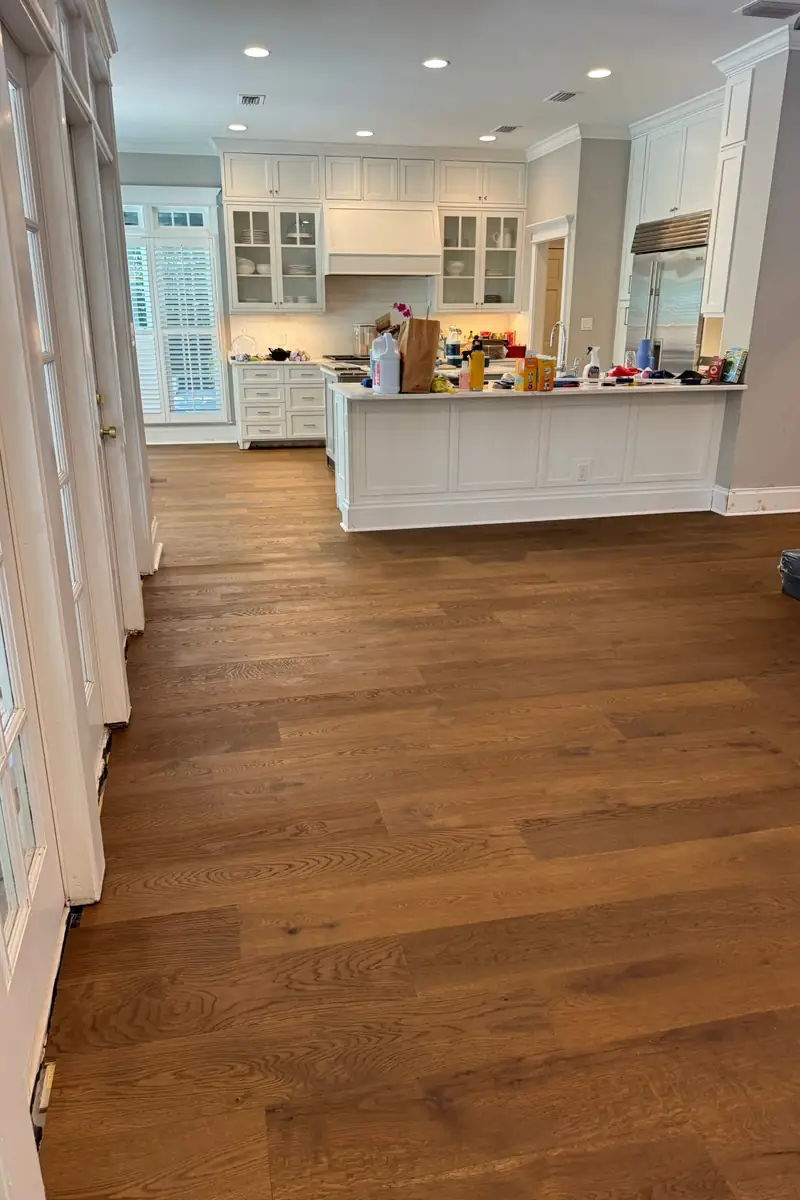
Should You Refinish or Replace Your Hardwood Floors in Denver?
Refinishing
What are the signs hardwood can be refinished?
Most hardwood floors that look tired are good candidates for refinishing. Refinishing removes the old finish and a thin layer of wood, then applies a new finish, so it works best when the problem is on the surface.
Surface problems that usually respond well to refinishing include dull or worn finish, light to moderate scratches, minor stains and discoloration, sun fading, and faint pet marks. A change in stain color is also possible, within the limits of the wood.
- Finish is worn, cloudy or peeling but the boards are firm
- Scratches and dents are shallow
- Floor is flat, with no widespread cupping or buckling
- Plenty of wood remains above the nails
How many times can a hardwood floor be refinished?
It depends on the wear layer, which is the usable wood above the tongue-and-groove joint. Traditional solid hardwood typically has a thick wear layer and can often be sanded multiple times over its life, though each sanding removes a little wood.
Engineered hardwood varies widely. Thicker wear layers can often be sanded once or more, while thin veneers may only accept a light buff and recoat. If you are unsure which you have, a flooring specialist can often tell by checking a floor vent opening, a transition edge or a removed baseboard.
Previous sanding history matters too. A floor that has already been refinished several times may have little wood left.
When is replacing the better choice?
Replacement makes more sense when the problem is deeper than the surface. Sanding cannot fix structural or moisture damage.
Warning signs include boards that are loose or springy, widespread cupping or crowning, dark water stains that go through the wood, active mold or odor, deep pet damage that has soaked in, and sections where the wear layer has been sanded through. A very thin engineered floor with heavy wear is also usually a replacement candidate.
If moisture is the cause, solve that first. Refinishing over a damp subfloor can trap problems under a fresh finish.
- Loose, soft or springy boards
- Water damage, active leaks or mold
- Large areas of deep cupping or buckling
- Wear layer too thin for another sanding
What about 1950s to 1970s Colorado homes with oak under carpet?
Many mid-century homes in the Denver area, including ranches and split-levels, were built with oak hardwood and later covered with carpet. Pulling up a corner often reveals a floor in better shape than expected, because the carpet protected it.
That said, older floors come with quirks. Boards are often narrow and may have gaps from decades of seasonal movement, patches where walls or ductwork changed, and tack-strip nail holes along the edges. Staining from pet accidents or past leaks can be present under the pad.
Because those boards were typically solid oak, they often have enough wood left for a full refinish. A specialist can confirm by inspecting the floor, checking the subfloor and, if needed, matching or repairing damaged boards before sanding.
What does the refinishing process involve?
A typical refinish includes repairing damaged boards, sanding through progressively finer grits, cleaning up dust, applying stain if you want a color change, and finishing with coats of a durable sealant. Drying and cure times depend on the product.
Plan on limited use of the room during the process. How long to wait before moving heavy furniture and rugs back depends on the finish, from a few days to a few weeks, so ask your installer for the cure guidance for the product they use.
Which option is more practical for your home?
Refinishing often costs less, creates less waste and keeps the character of an existing floor, but it only works if the floor is sound. Replacement is the right call when the damage is structural or when you want a different look or construction, such as moving from narrow oak strips to wide engineered planks.
A free in-home estimate is the simplest way to find out. You can also text photos of the floor, any problem areas and a corner under the carpet for a quick first opinion.
Frequently asked questions
How do I know if my hardwood floors can be refinished?
If boards are firm, flat and free of water damage, and enough wood remains above the nails, they can usually be refinished. A flooring specialist can check the wear layer and condition during a free in-home estimate.
Can I refinish hardwood that has been under carpet for decades?
Often yes. Mid-century Colorado homes frequently have solid oak under carpet that is in good shape. Expect tack-strip holes, possible stains and gaps, which can be repaired or filled before sanding and finishing.
How many times can hardwood be sanded?
It depends on the thickness of the usable wood above the tongue. Solid hardwood can often be sanded several times, while engineered hardwood may allow only one sanding or a light recoat depending on its wear layer.
Can water-damaged hardwood be refinished?
Minor surface staining sometimes can, but cupped, soft, moldy or dark-stained boards usually need repair or replacement. Always fix the moisture source first, otherwise the problem tends to return under a new finish.
Is it better to refinish or replace old hardwood floors?
Refinishing is usually the practical choice when the boards are sound and the issue is surface wear. Replacement makes sense for structural damage, thin wear layers or when you want a different type of floor altogether.
How long before I can use a refinished floor?
Light foot traffic is often possible within a day or so, but finishes keep curing for days or weeks. Follow the finish manufacturer's guidance, and wait before moving heavy furniture or laying down rugs.
Related services
Where we do this work
More flooring guides
Flow Flooring Pros on Google
Your experience matters.
Have we worked on your floors? Share your experience on our Google business profile.
Visit our Google profile ↗