
We install engineered hardwood across Denver Metro, within 45 miles of Denver, a stable real-wood option for slabs, basements and radiant heat. Text photos for quick pricing, or book a free in-home estimate.
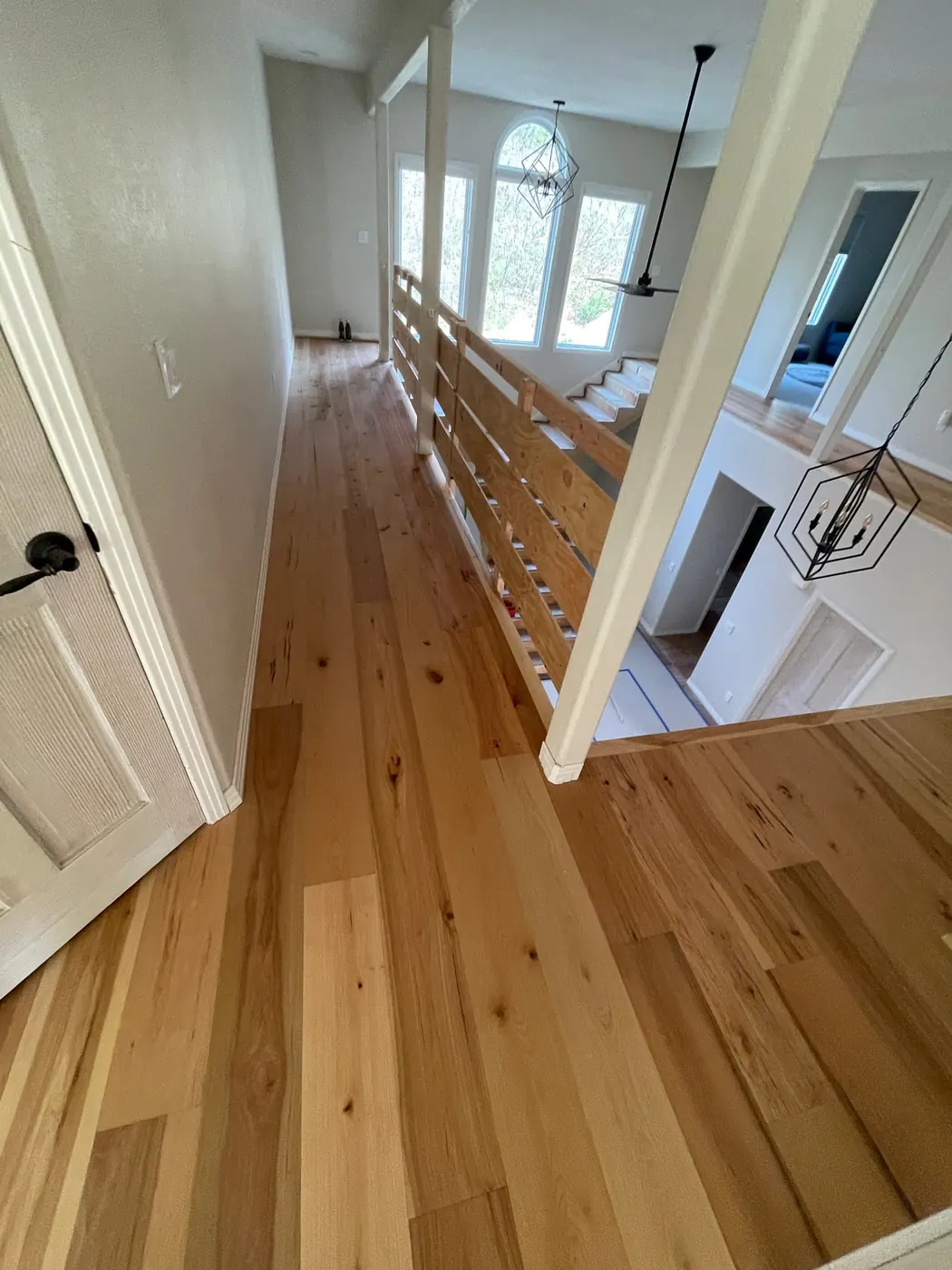
Engineered wood has a real hardwood surface over a layered core, which makes it more dimensionally stable than solid planks. That matters in Colorado, where dry high-altitude air and seasonal humidity swings can make solid boards move. It is also a practical option for rooms where solid hardwood is not recommended, such as concrete slabs, finished basements and many radiant-heat floors.
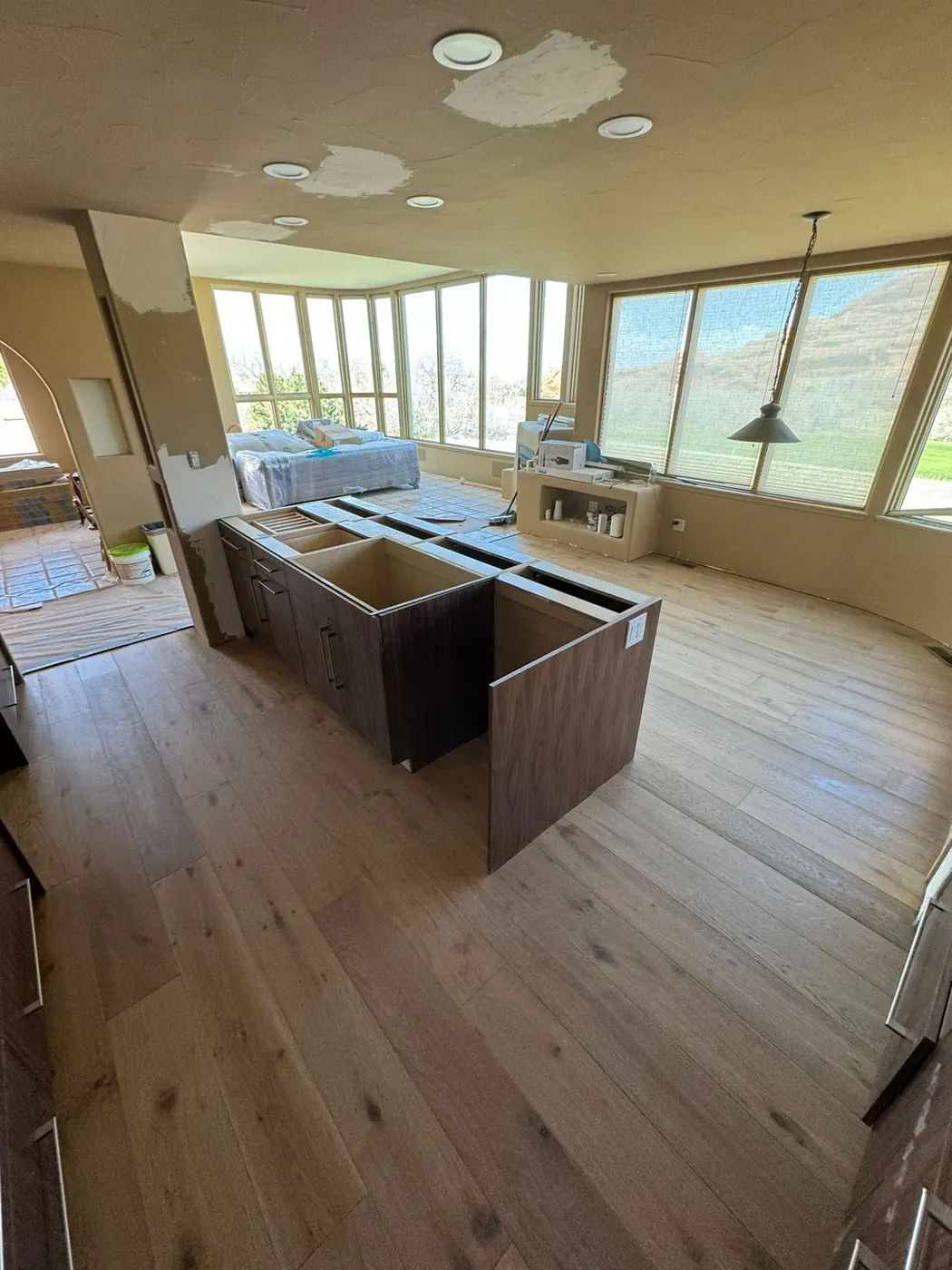
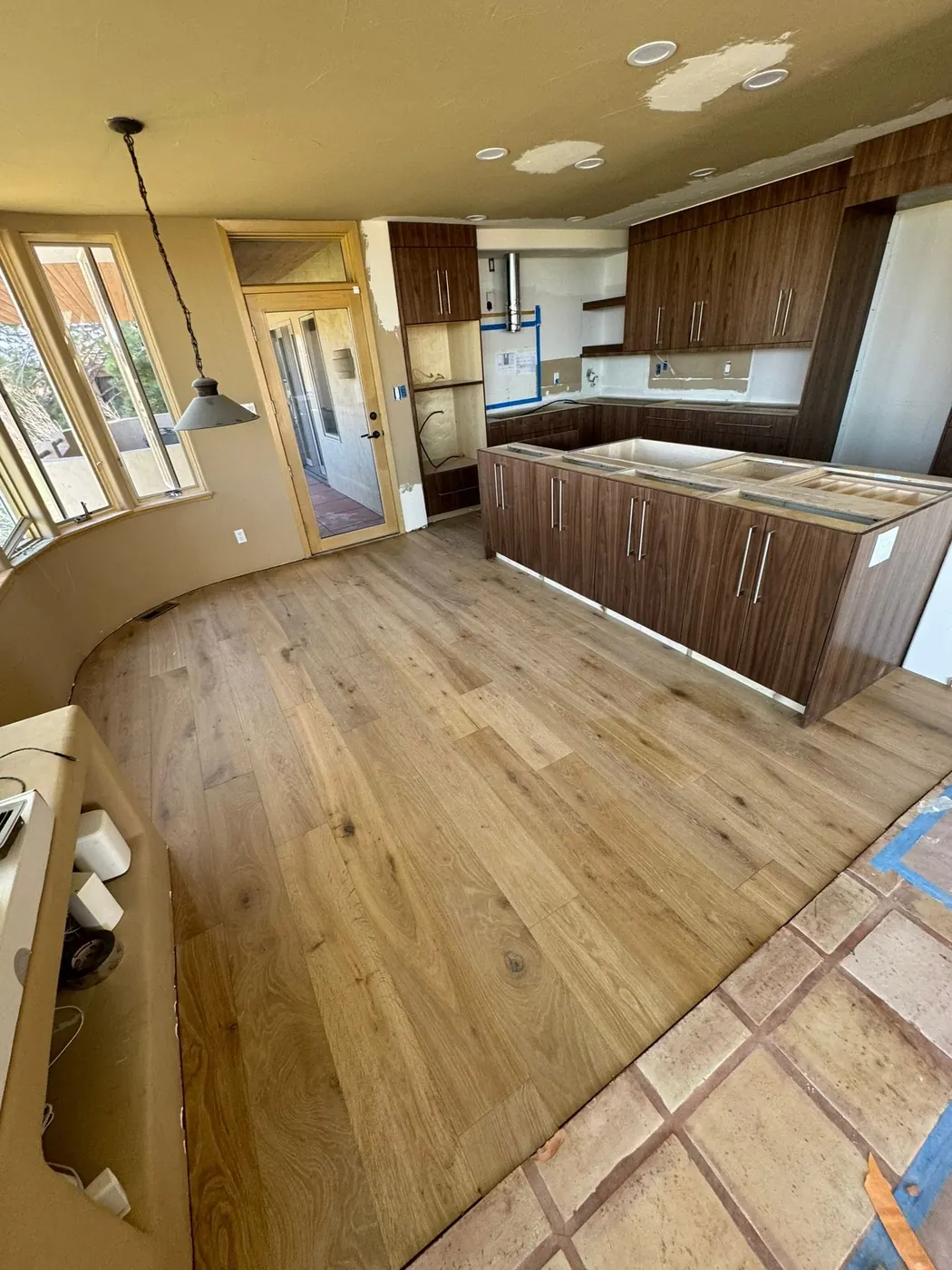
Products differ widely. Wear-layer thickness decides how many times a floor can be refinished, while plank width, core construction and finish affect stability and look. Wider planks look striking in open Denver floor plans but need a flatter subfloor, so we check flatness and moisture first and may recommend grinding or leveling the slab before installation.
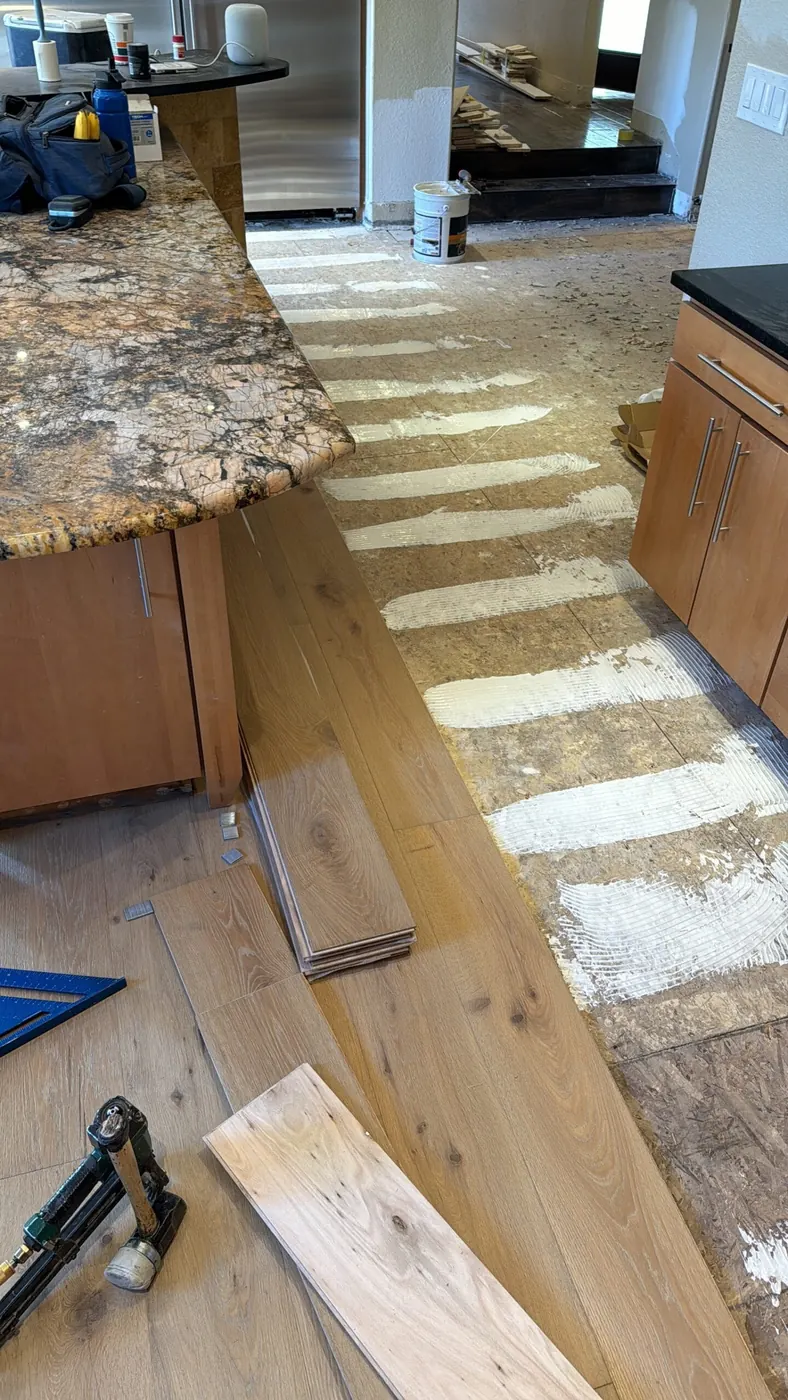
Installation can be glued, nailed or floated, depending on the subfloor and product. In condos and HOA communities, sound rules may require a specific underlayment, which affects which method is allowed. We help you choose a product and method that fit your home and building.
Serving Denver Metro within 45 miles of Denver. See all service areas
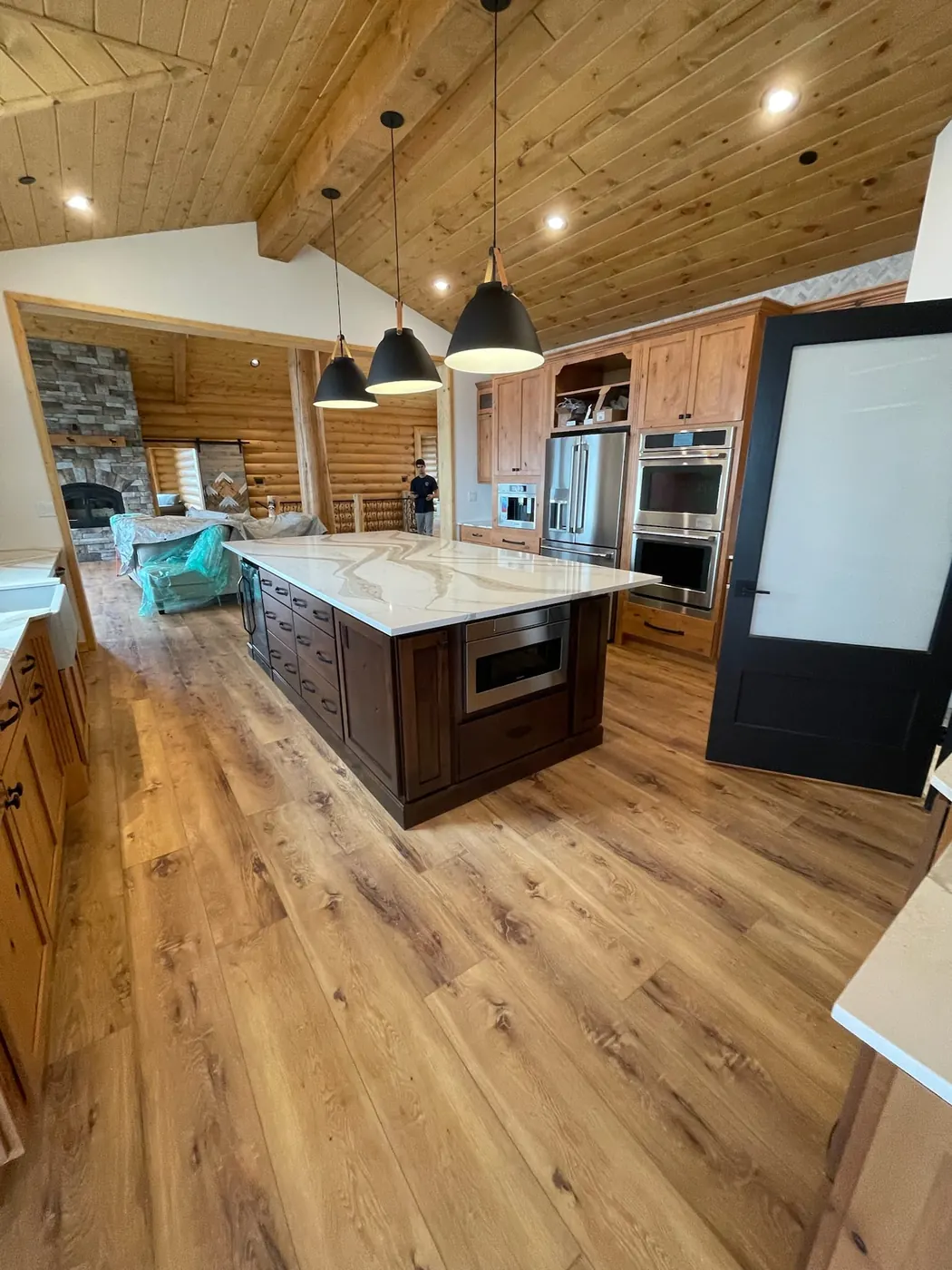
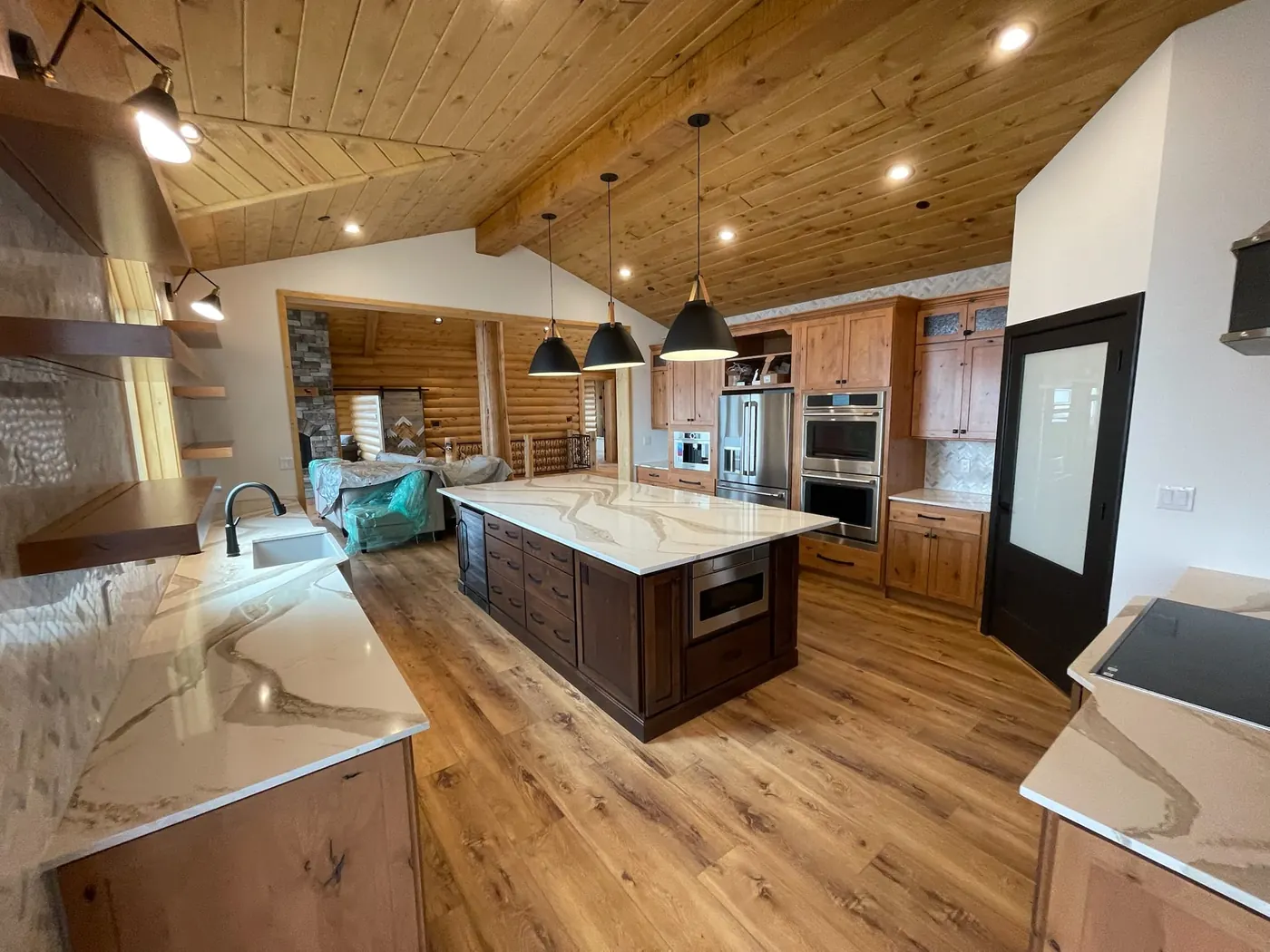
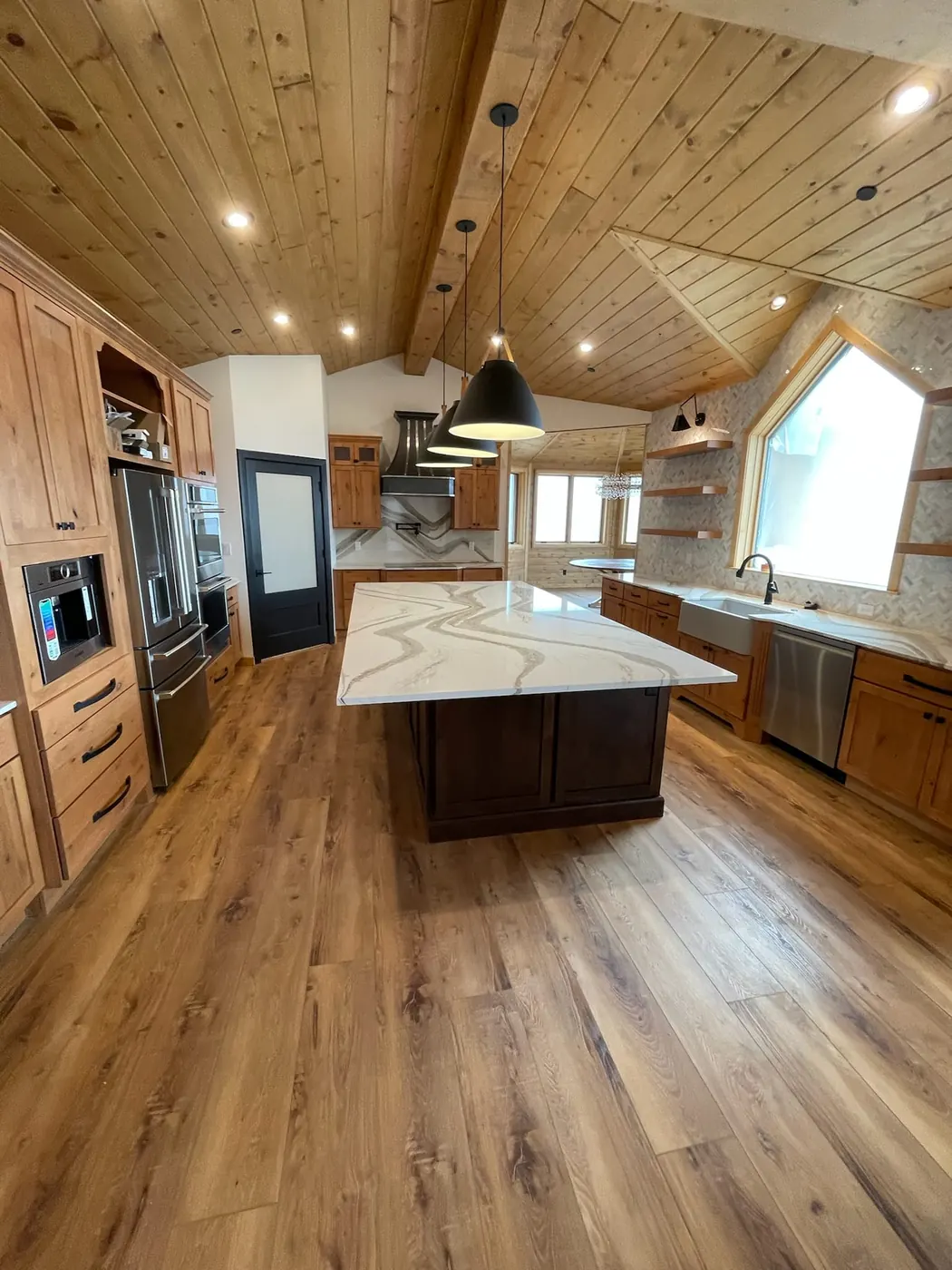
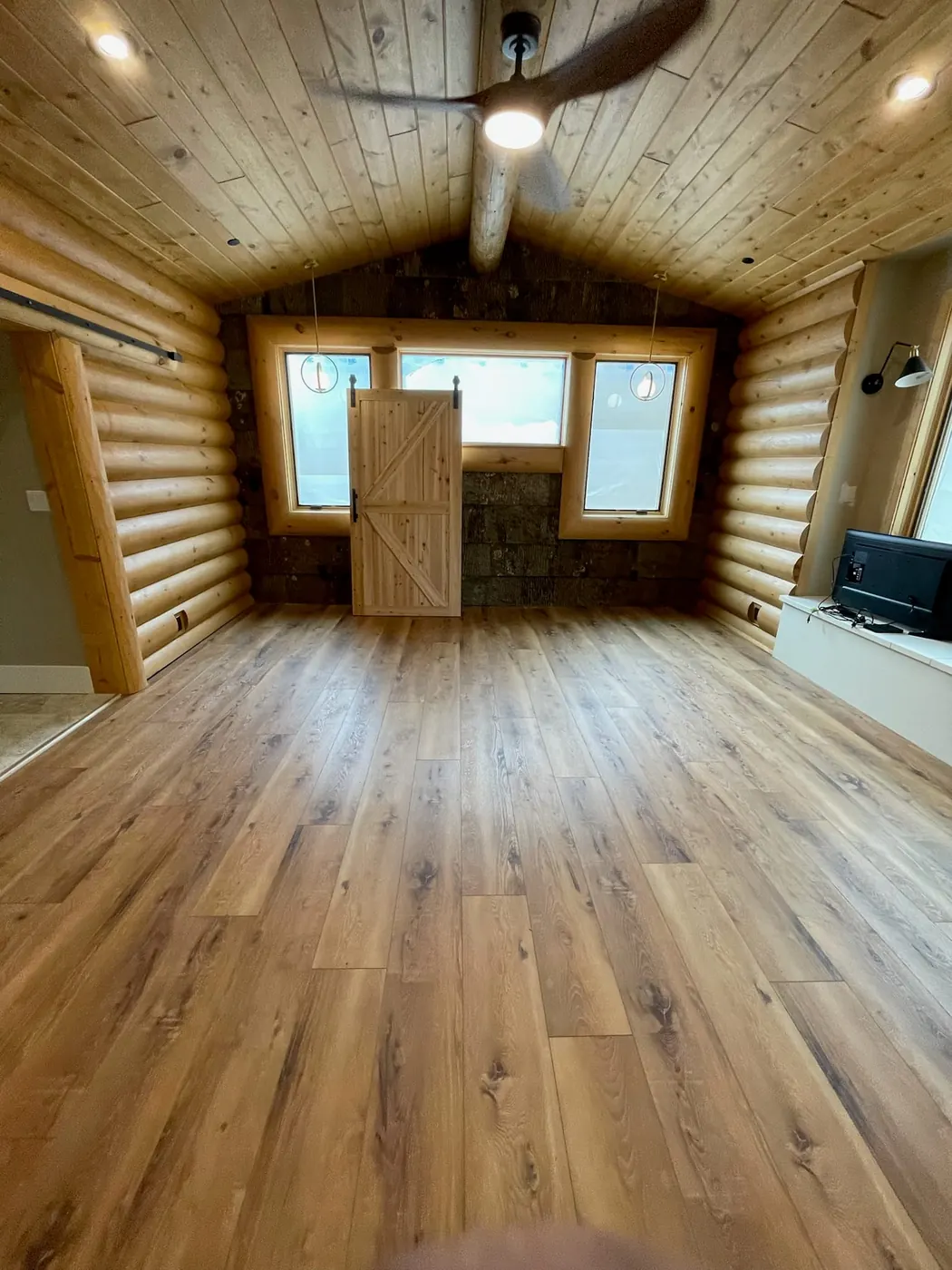
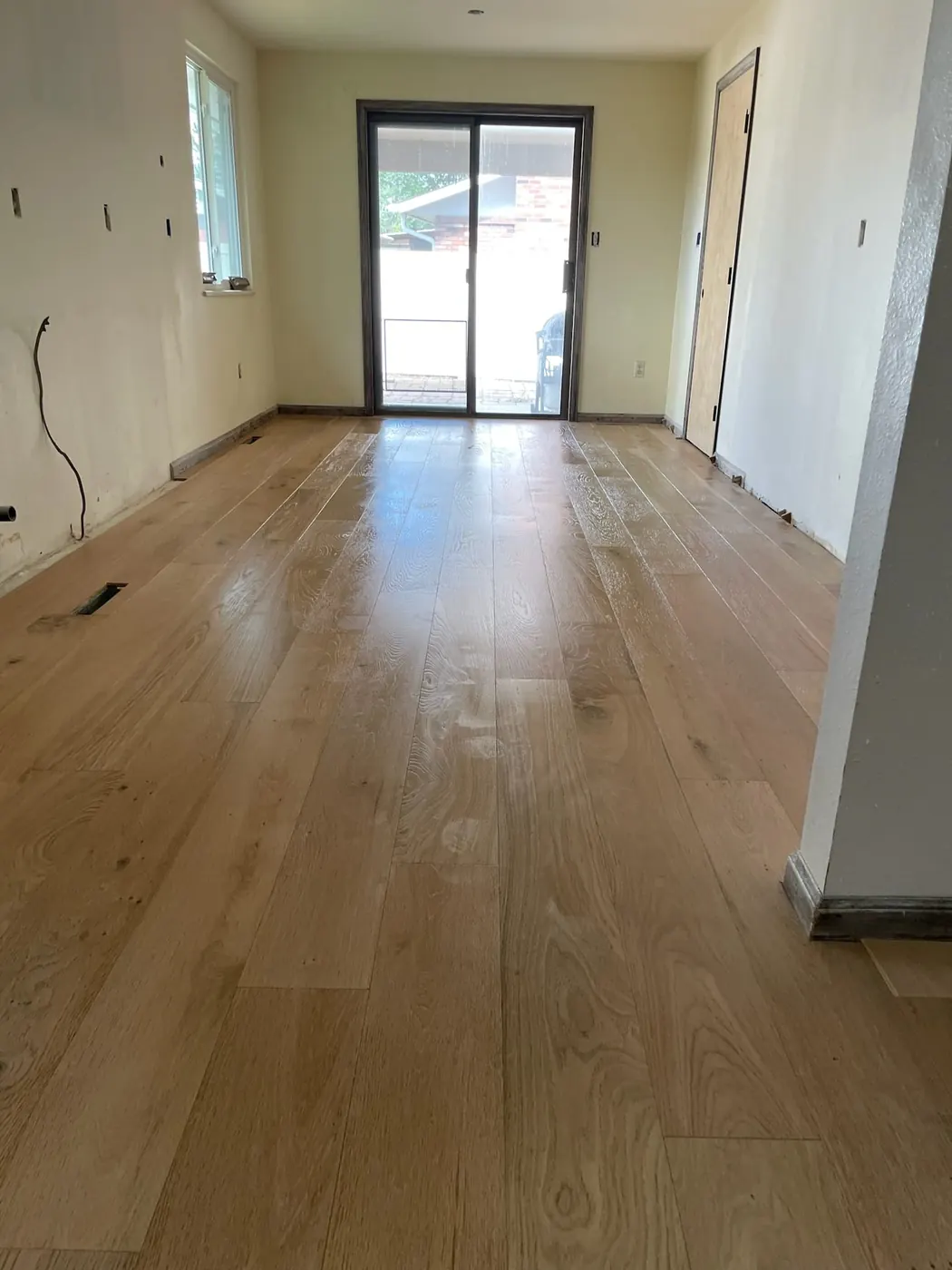
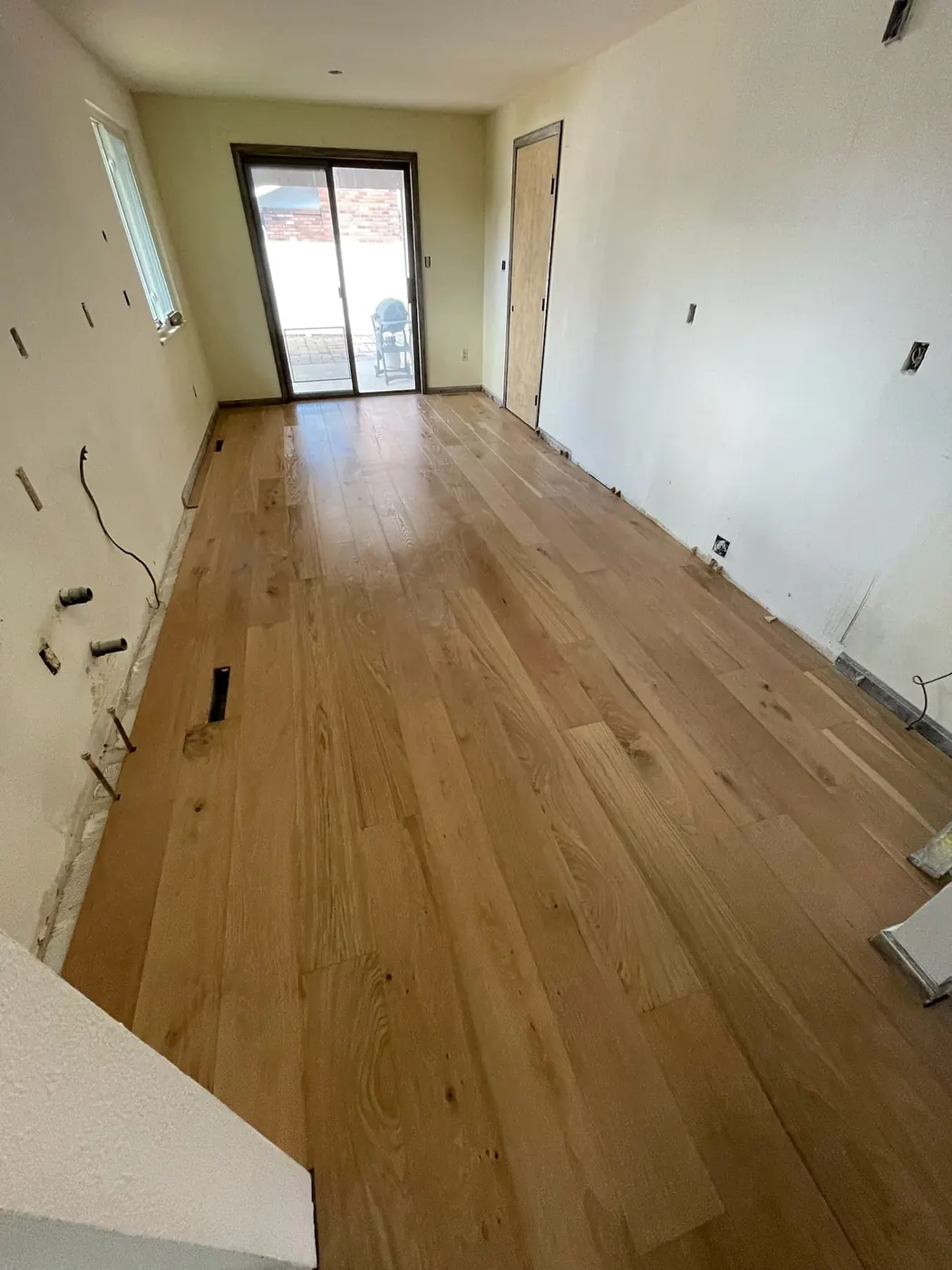
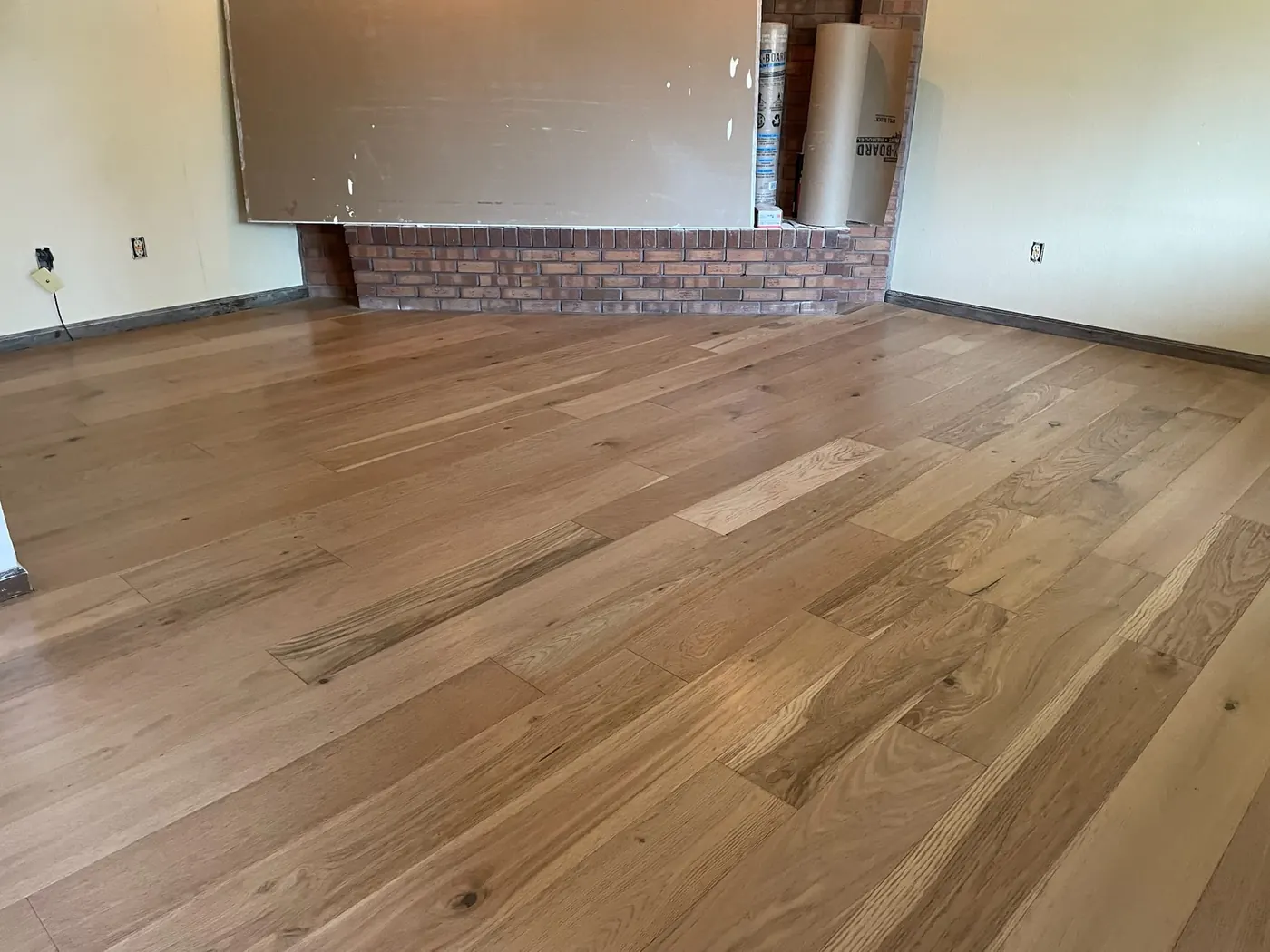
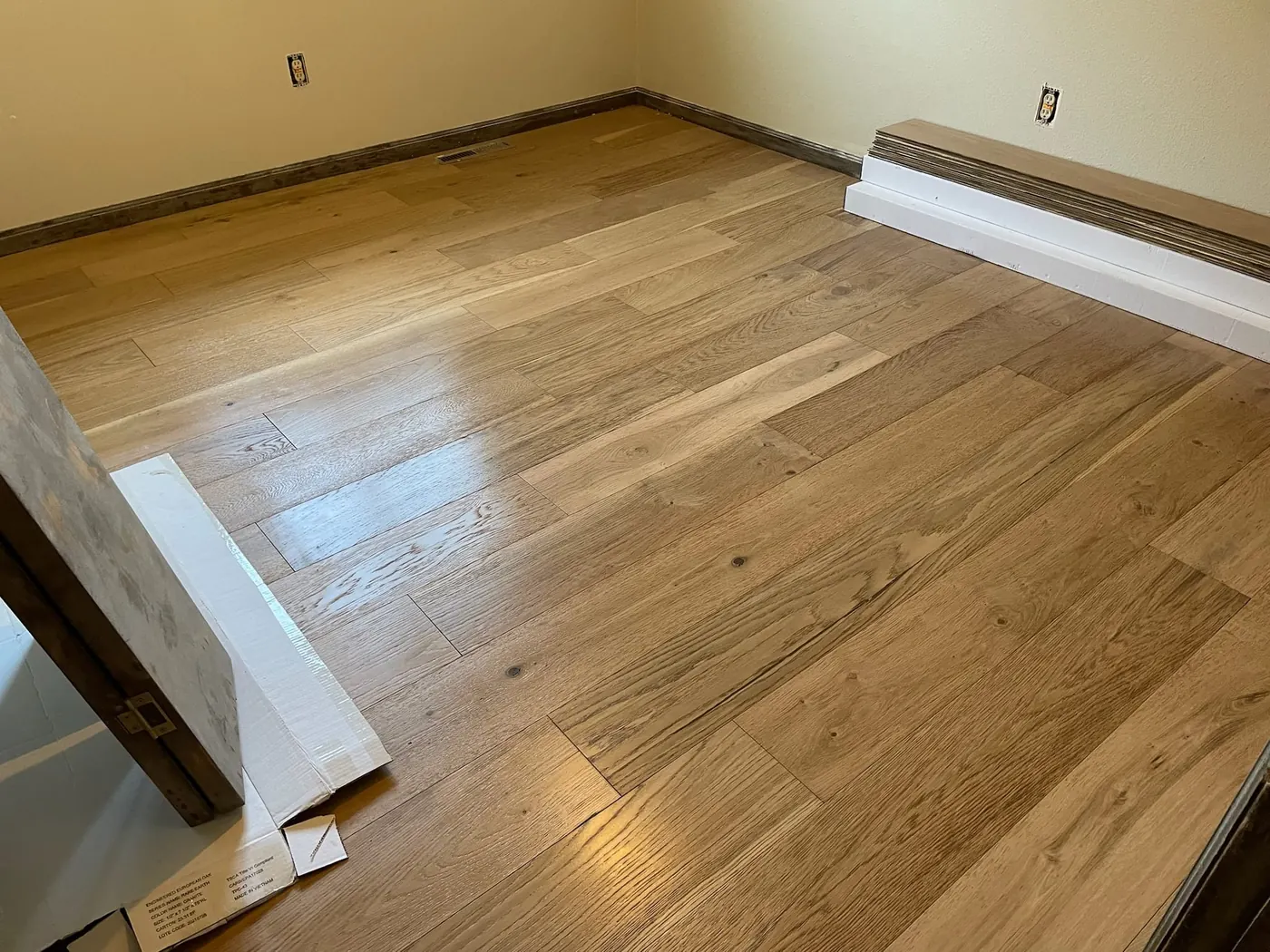
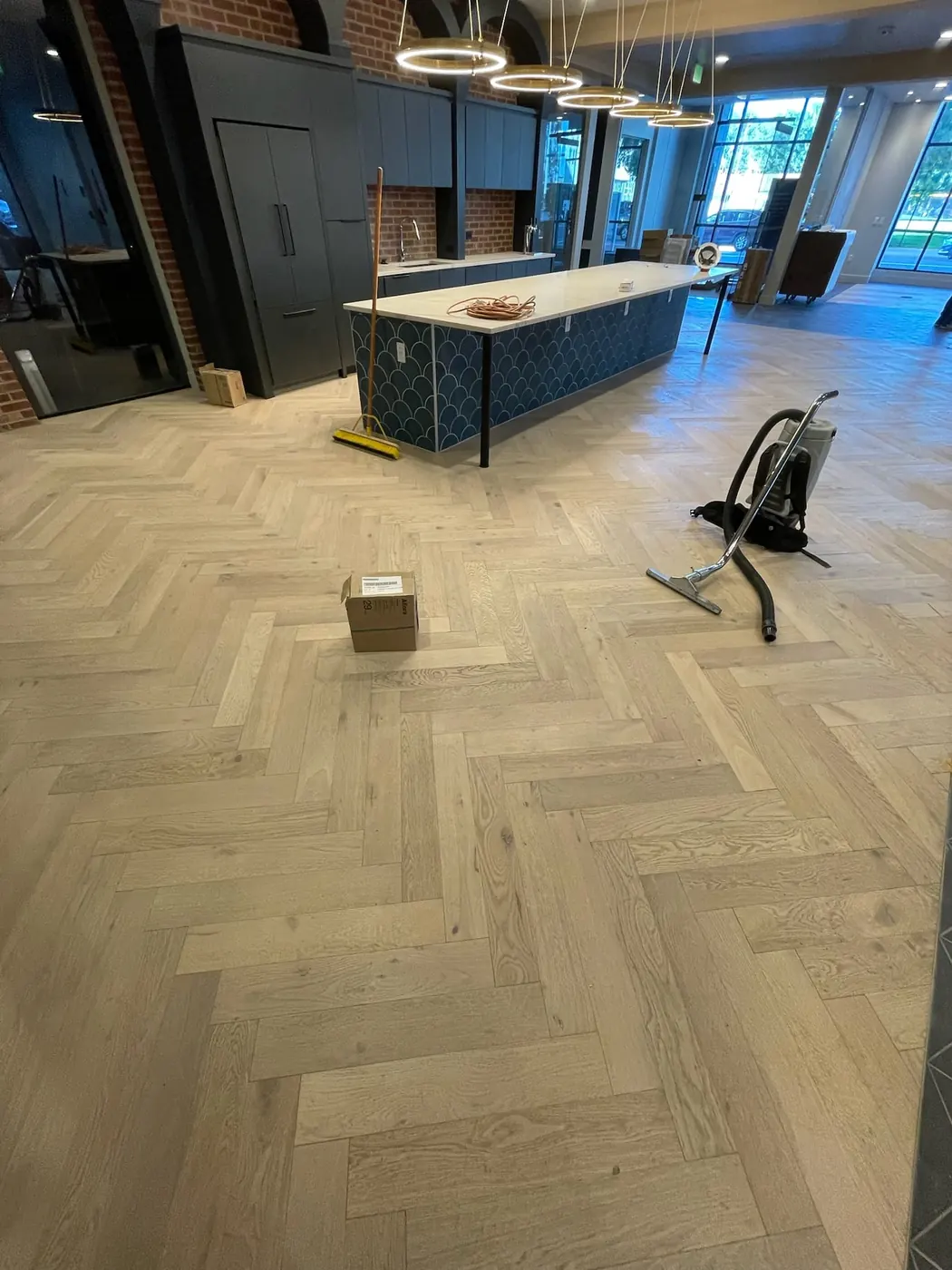
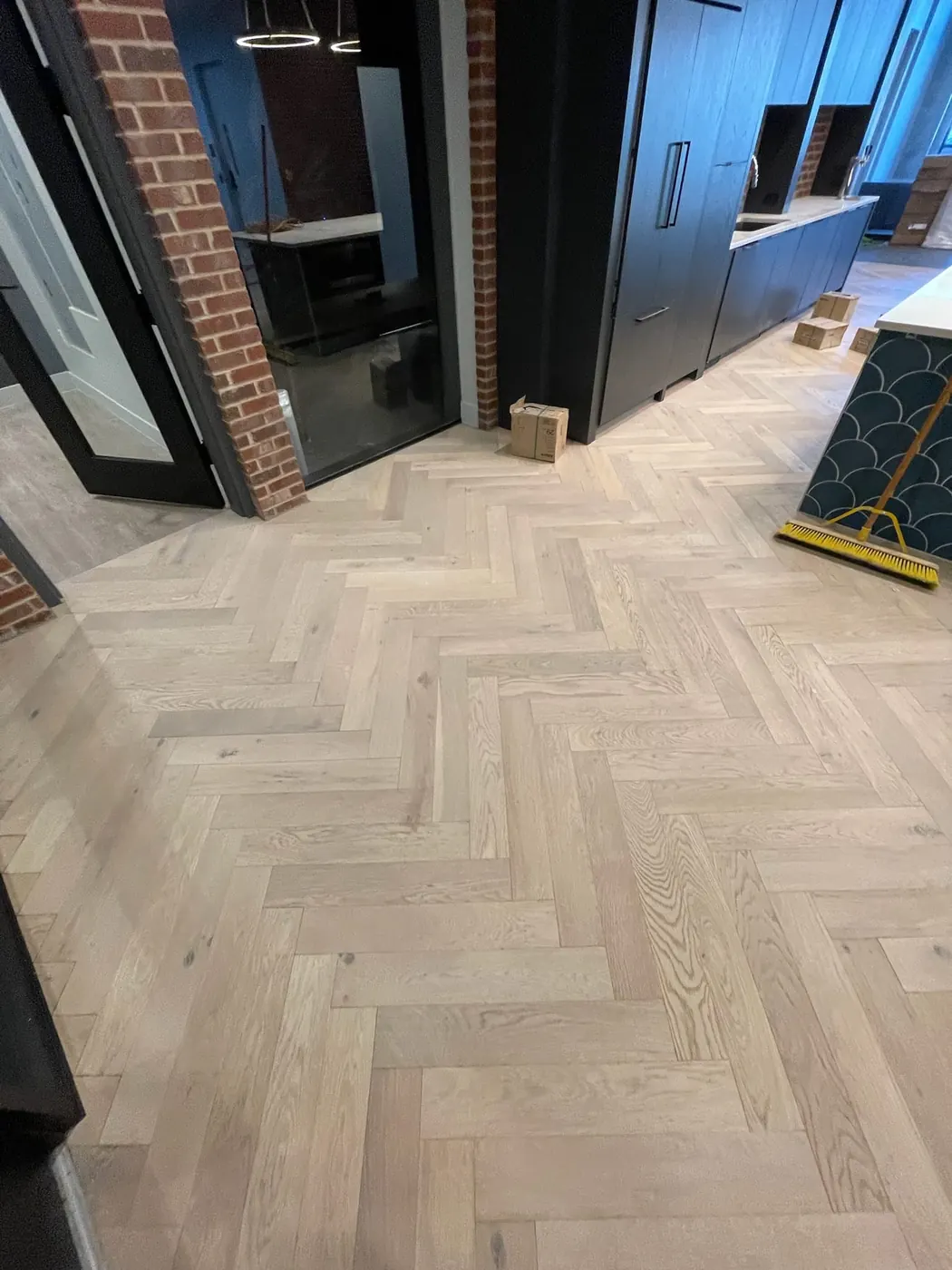
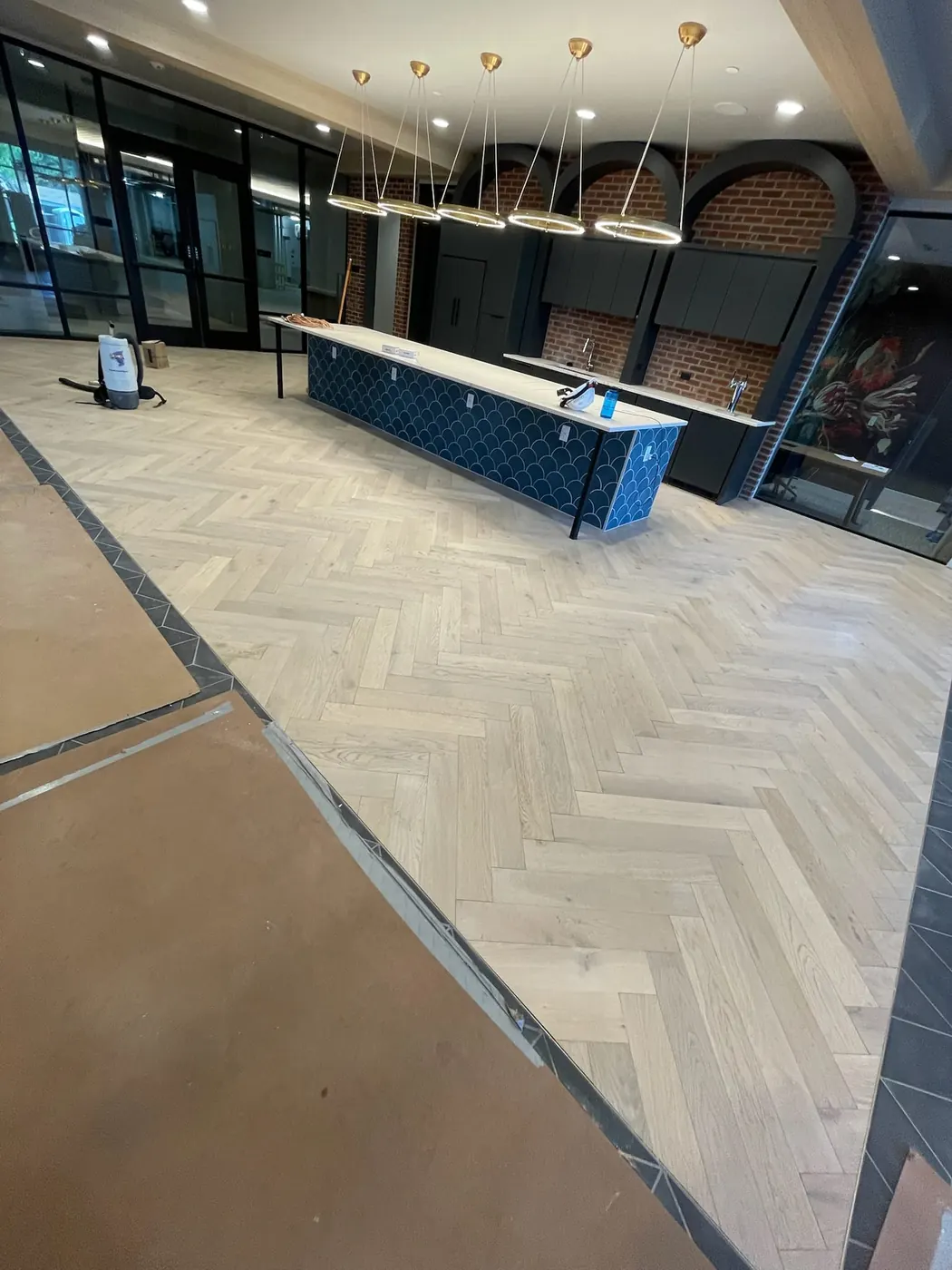
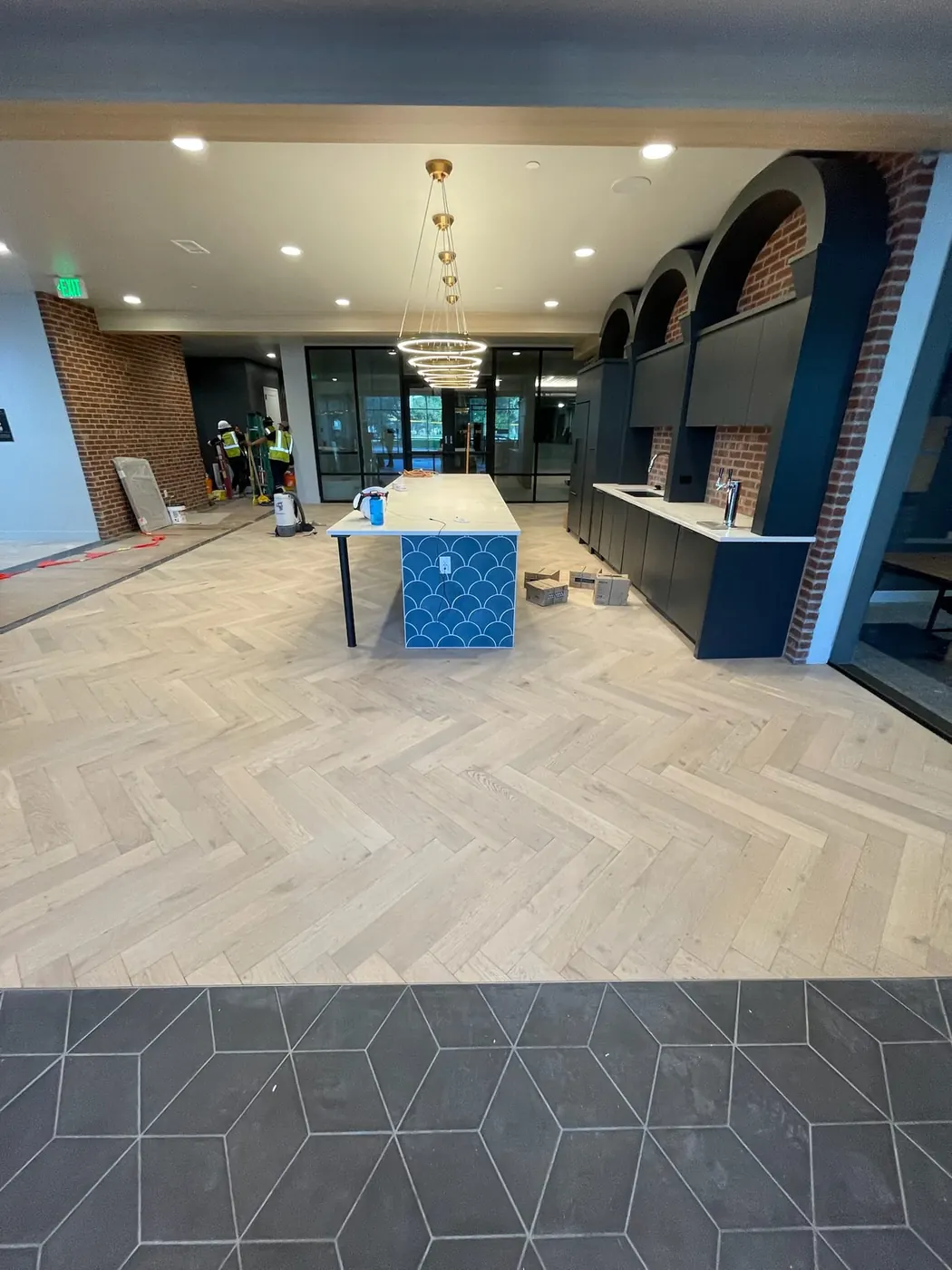
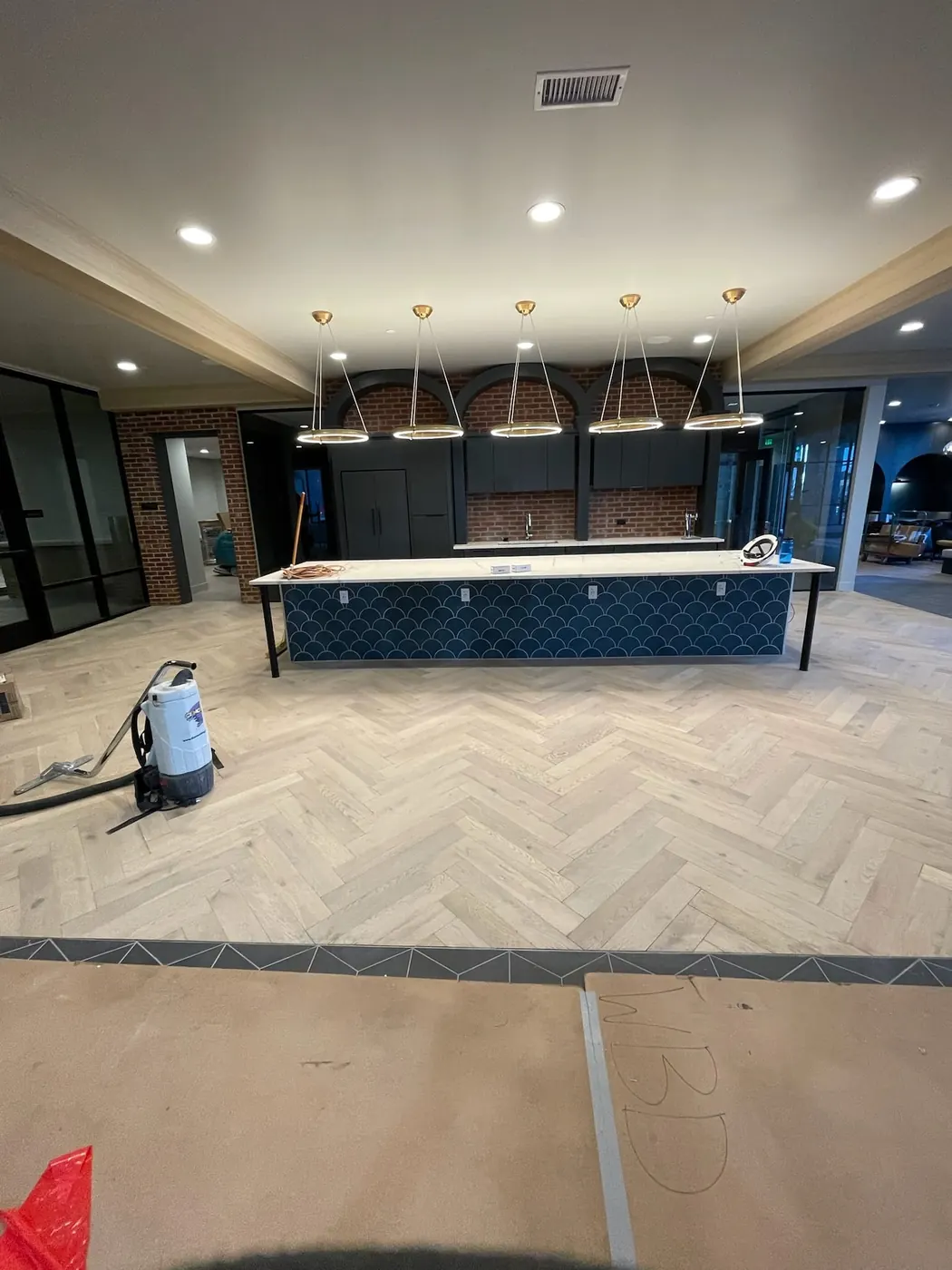
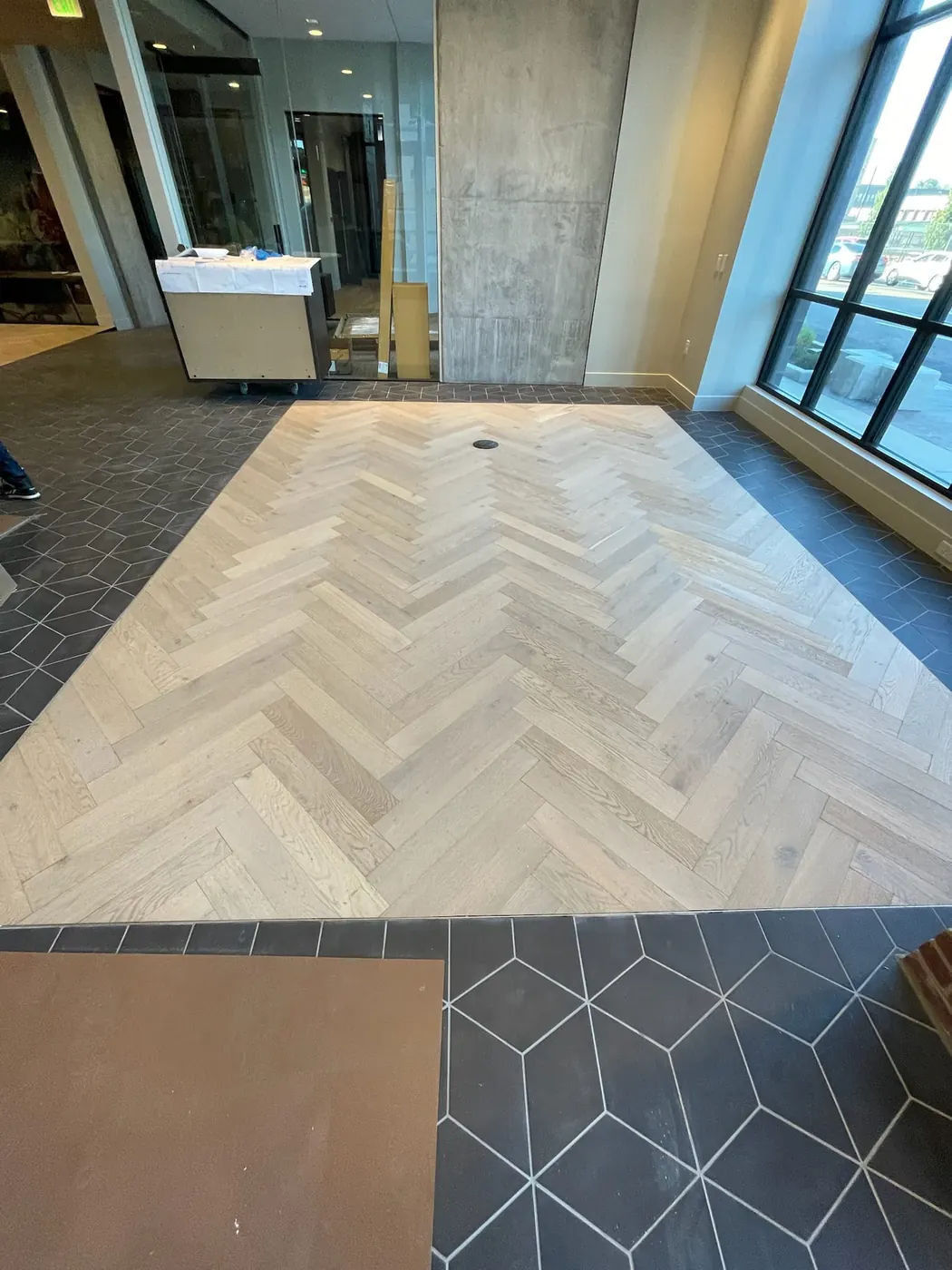
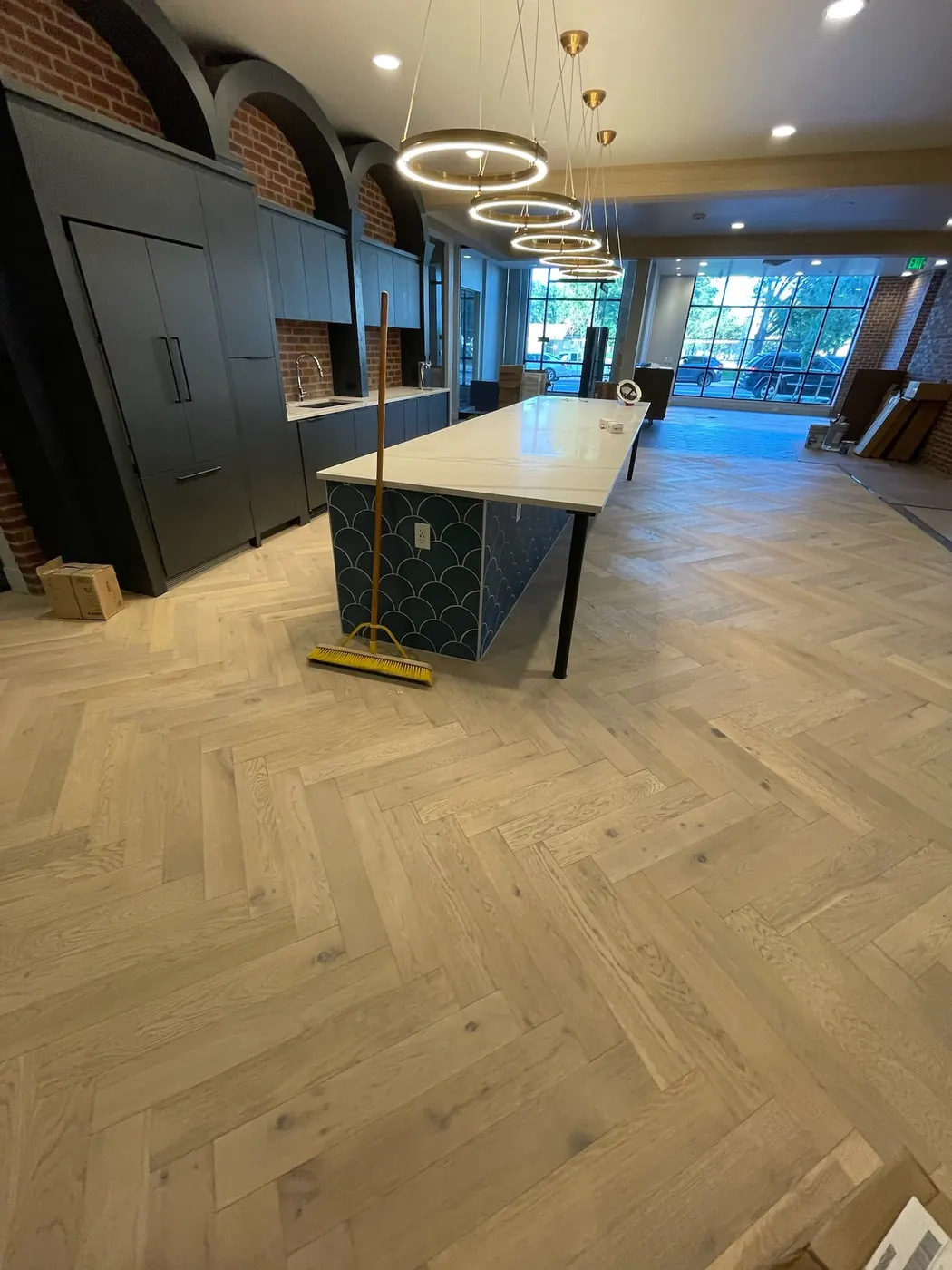
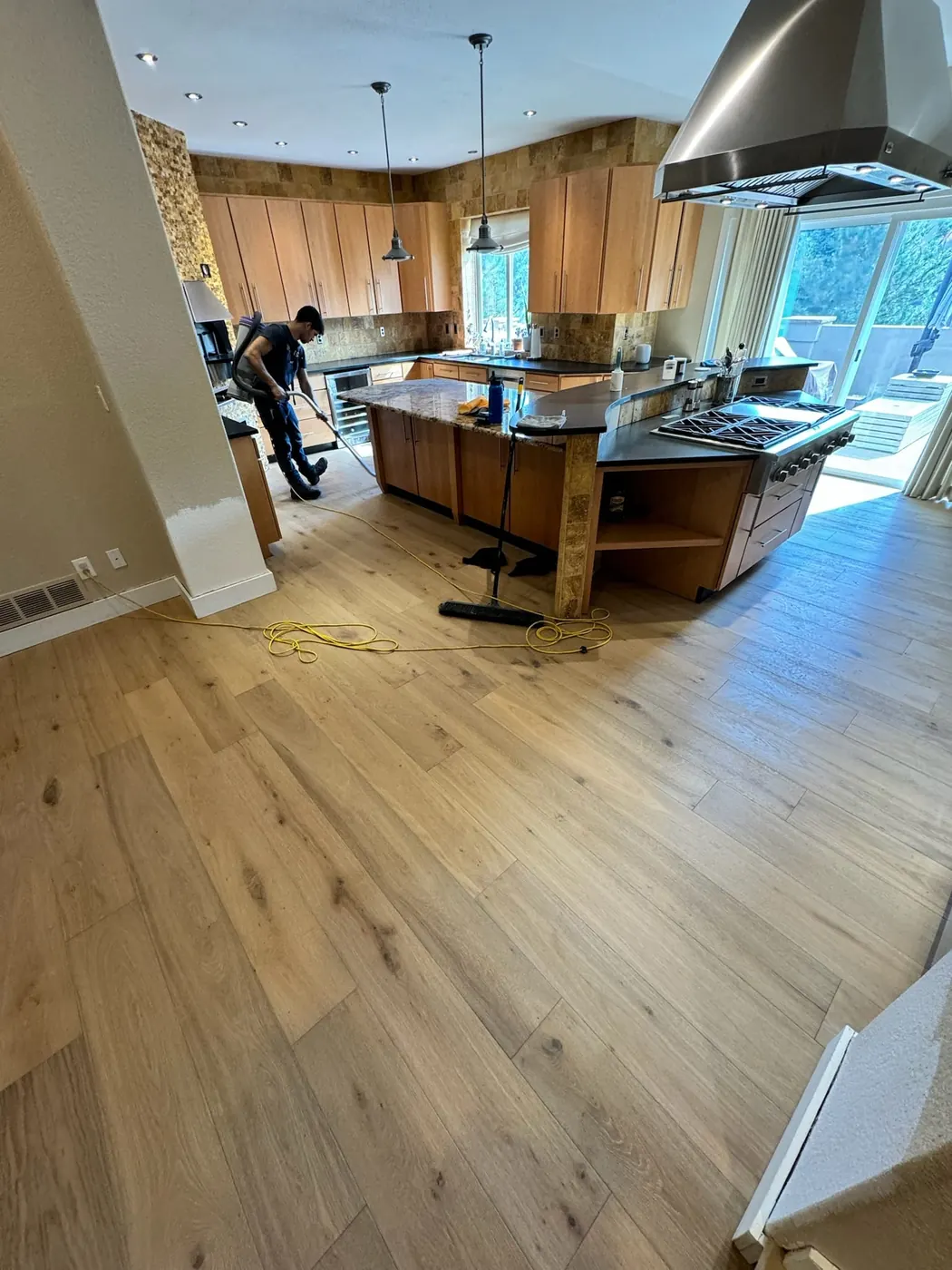
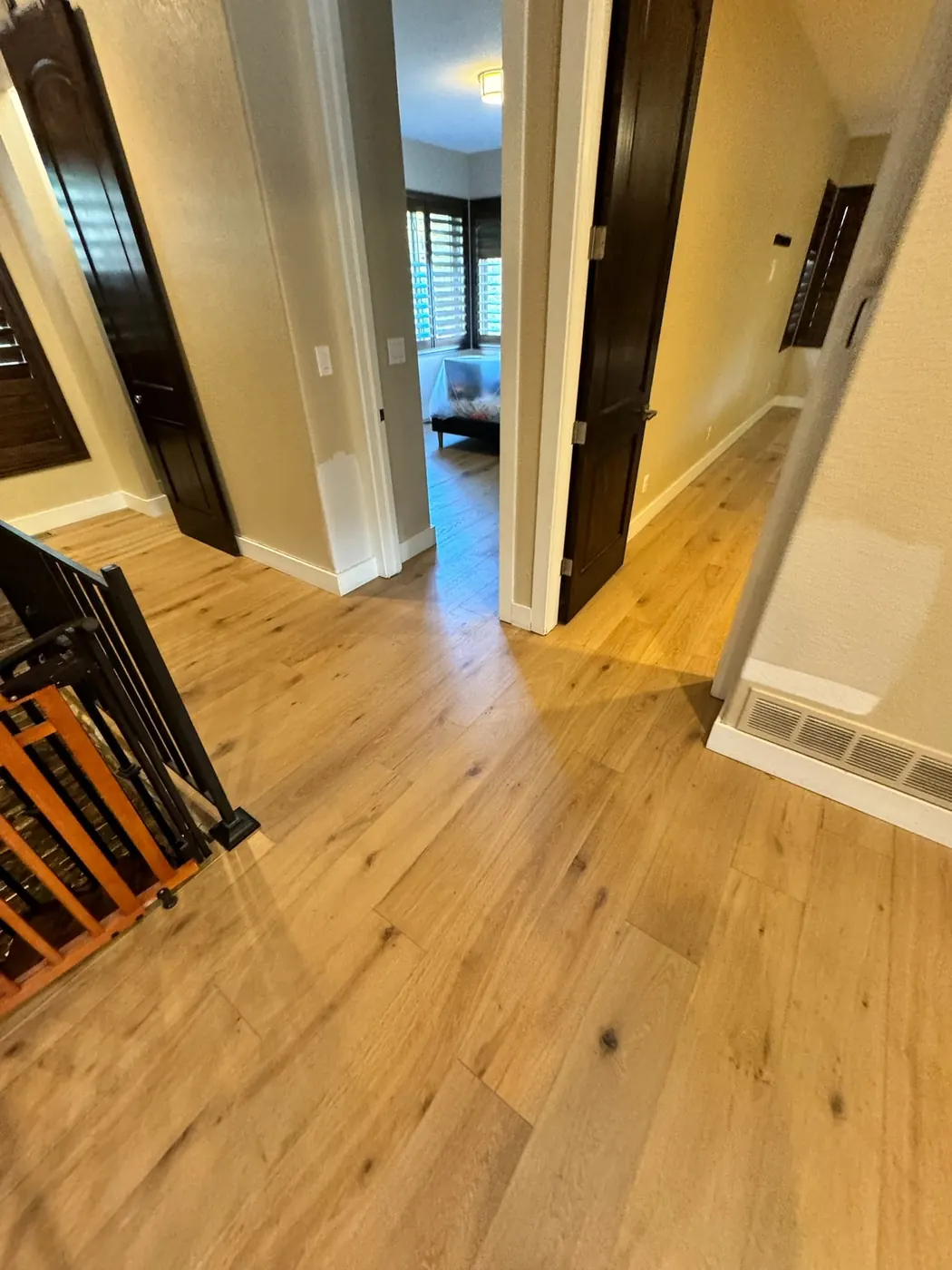
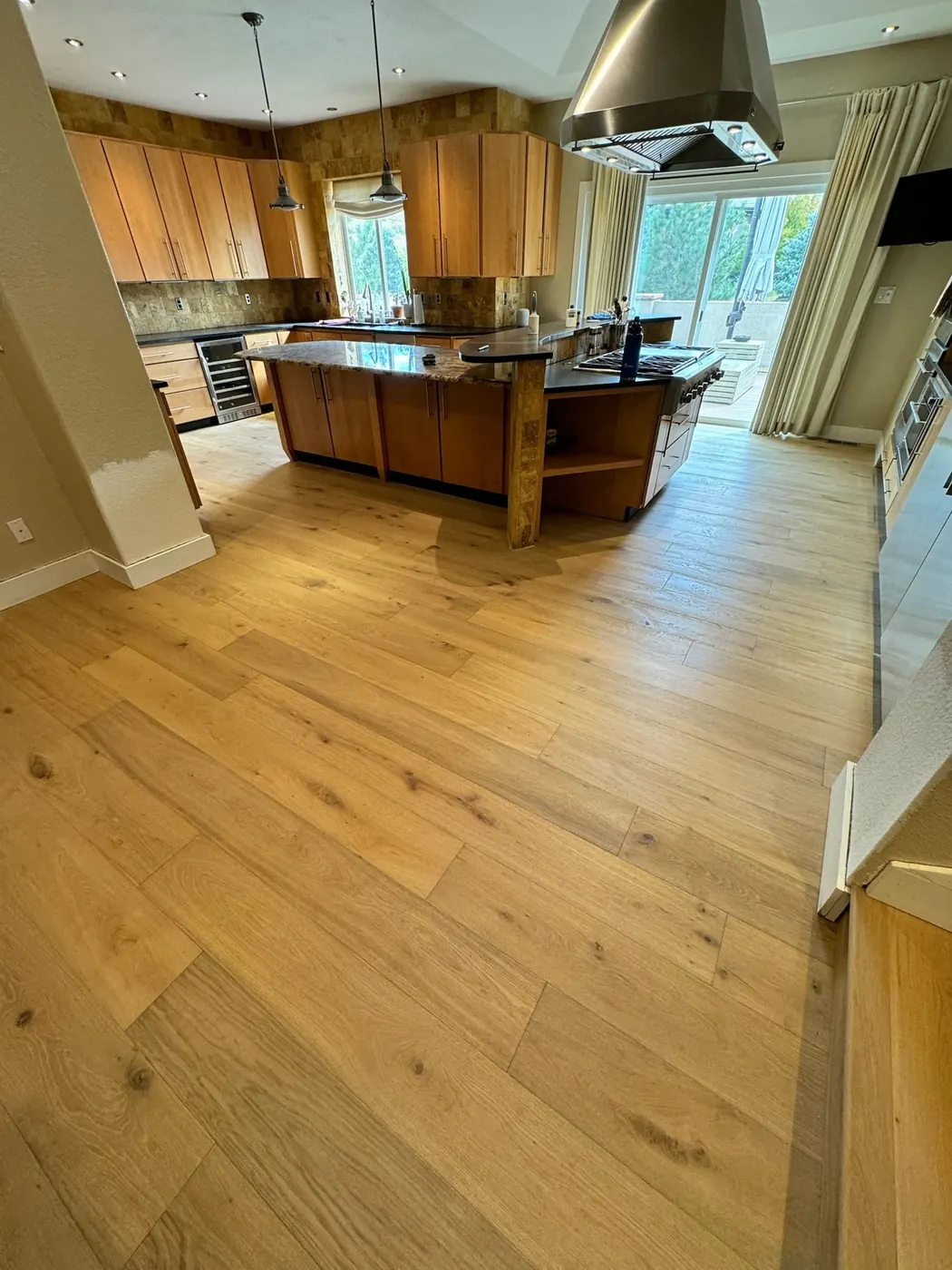
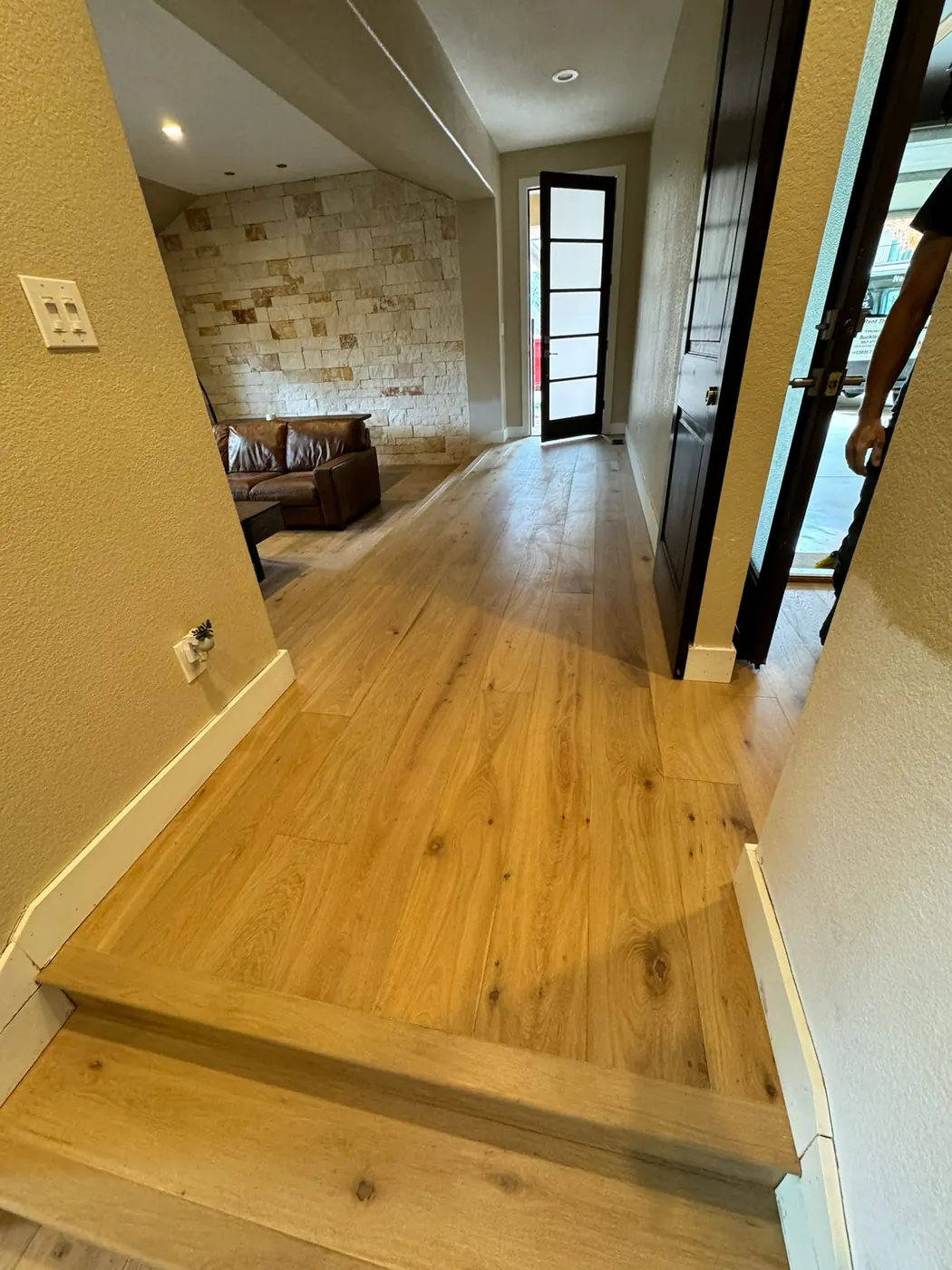
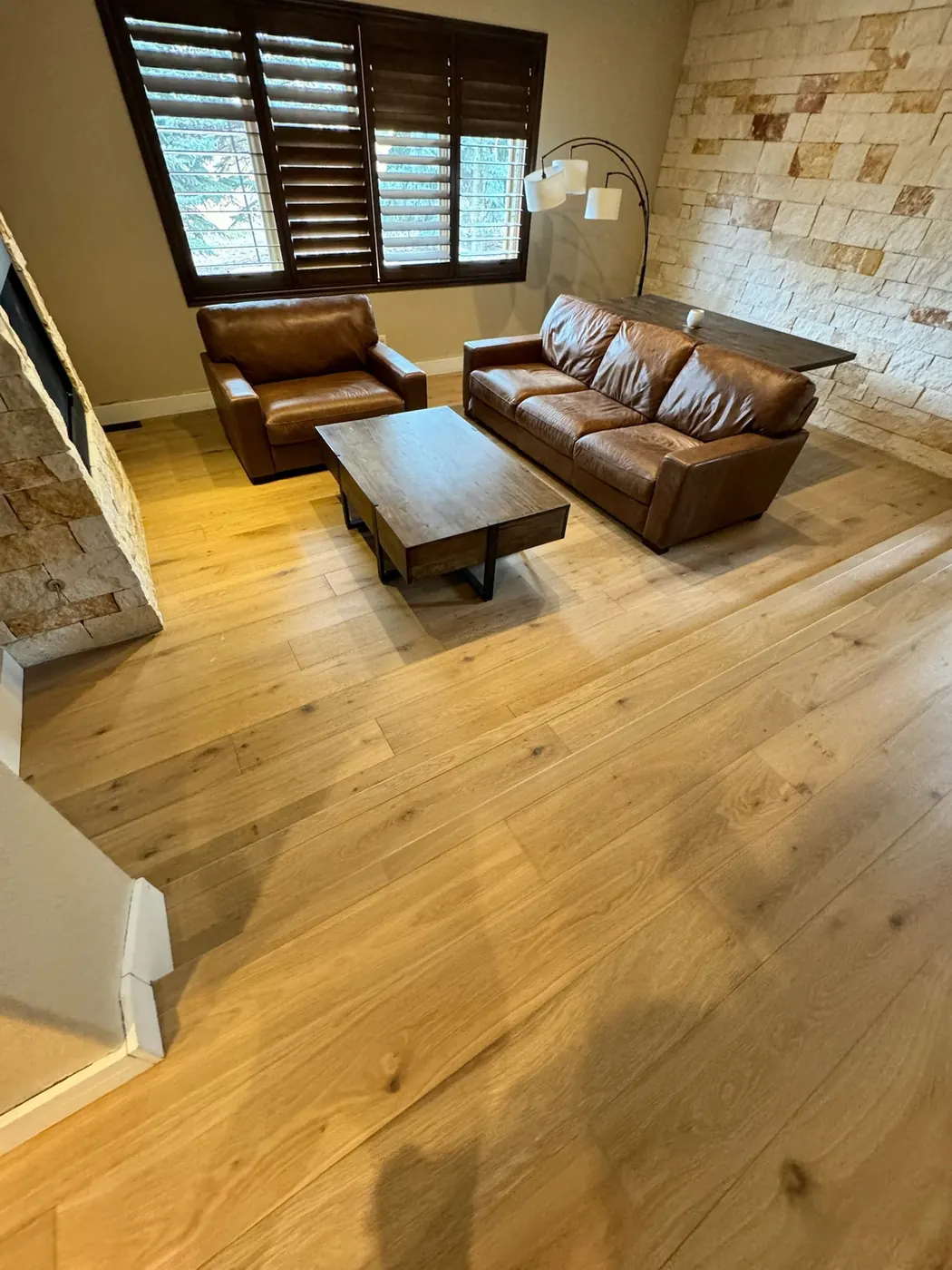
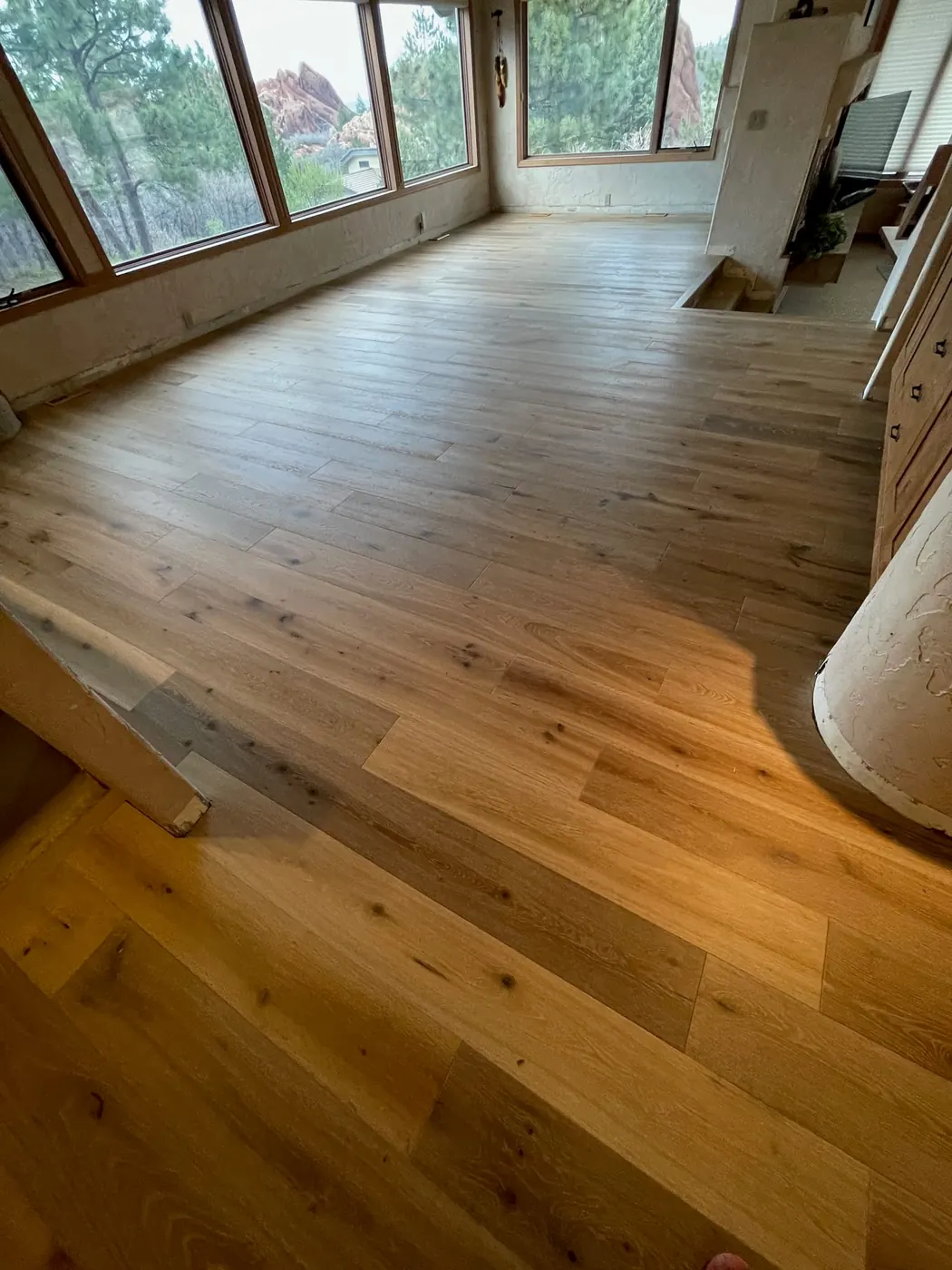
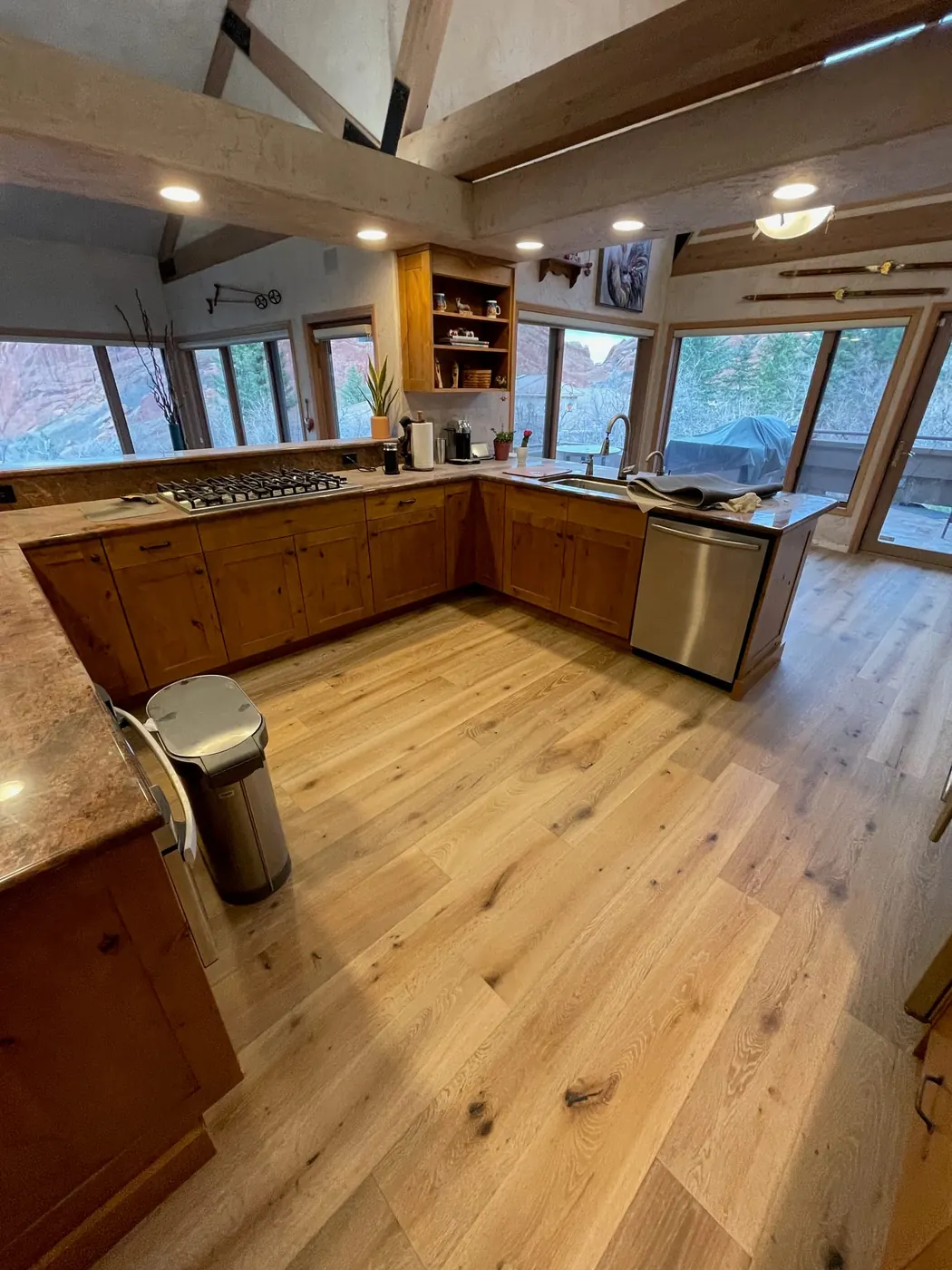
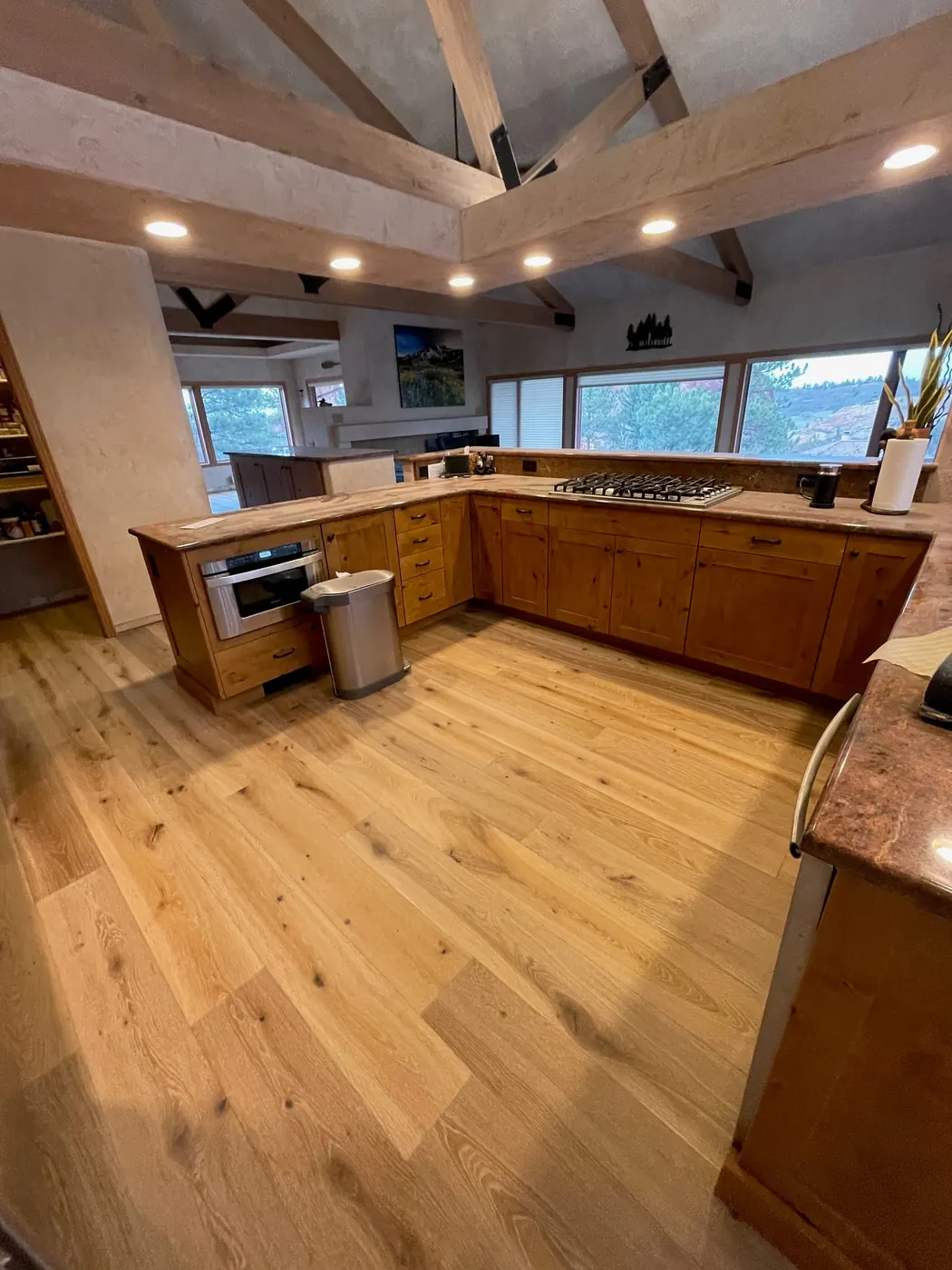
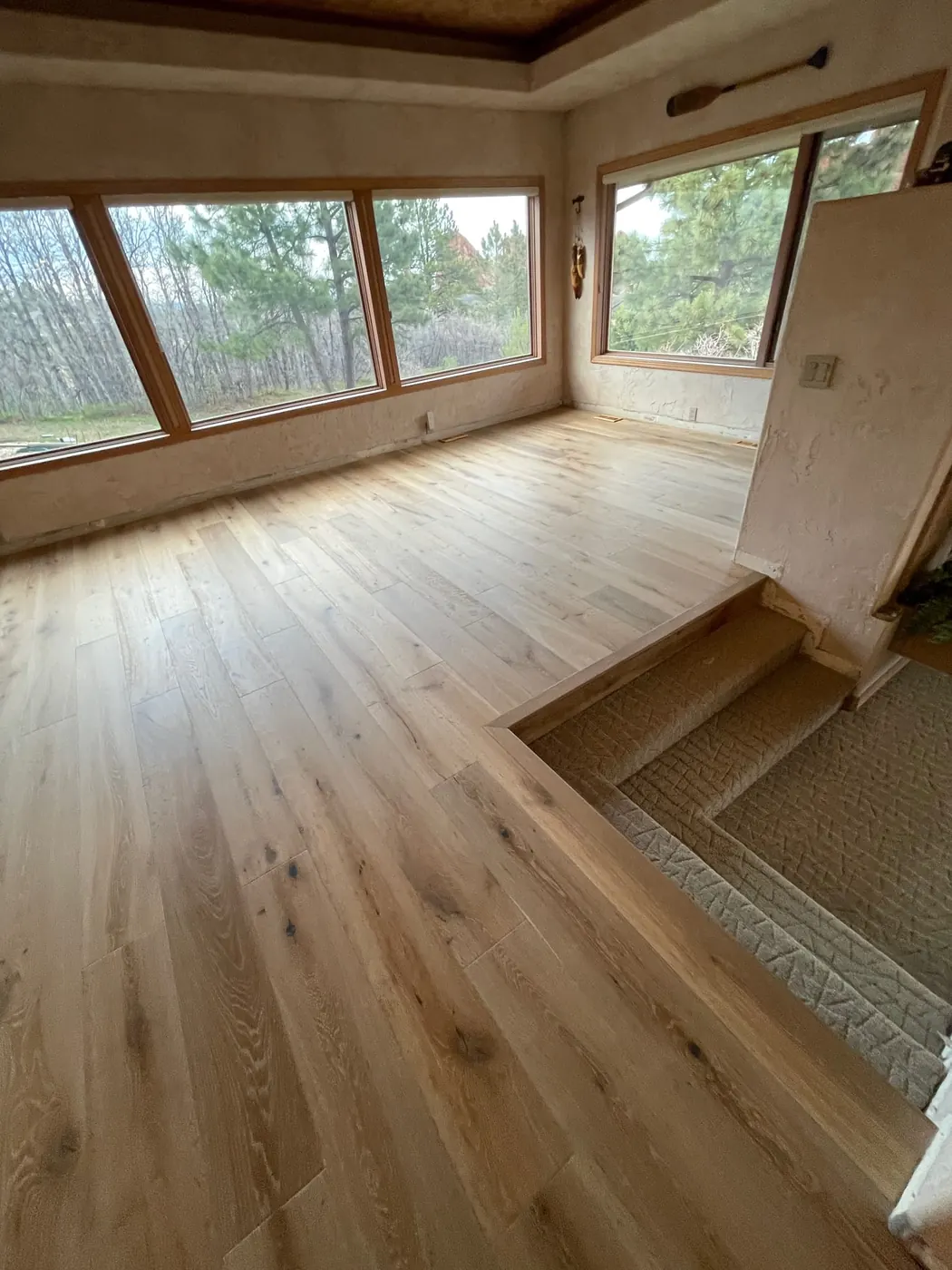
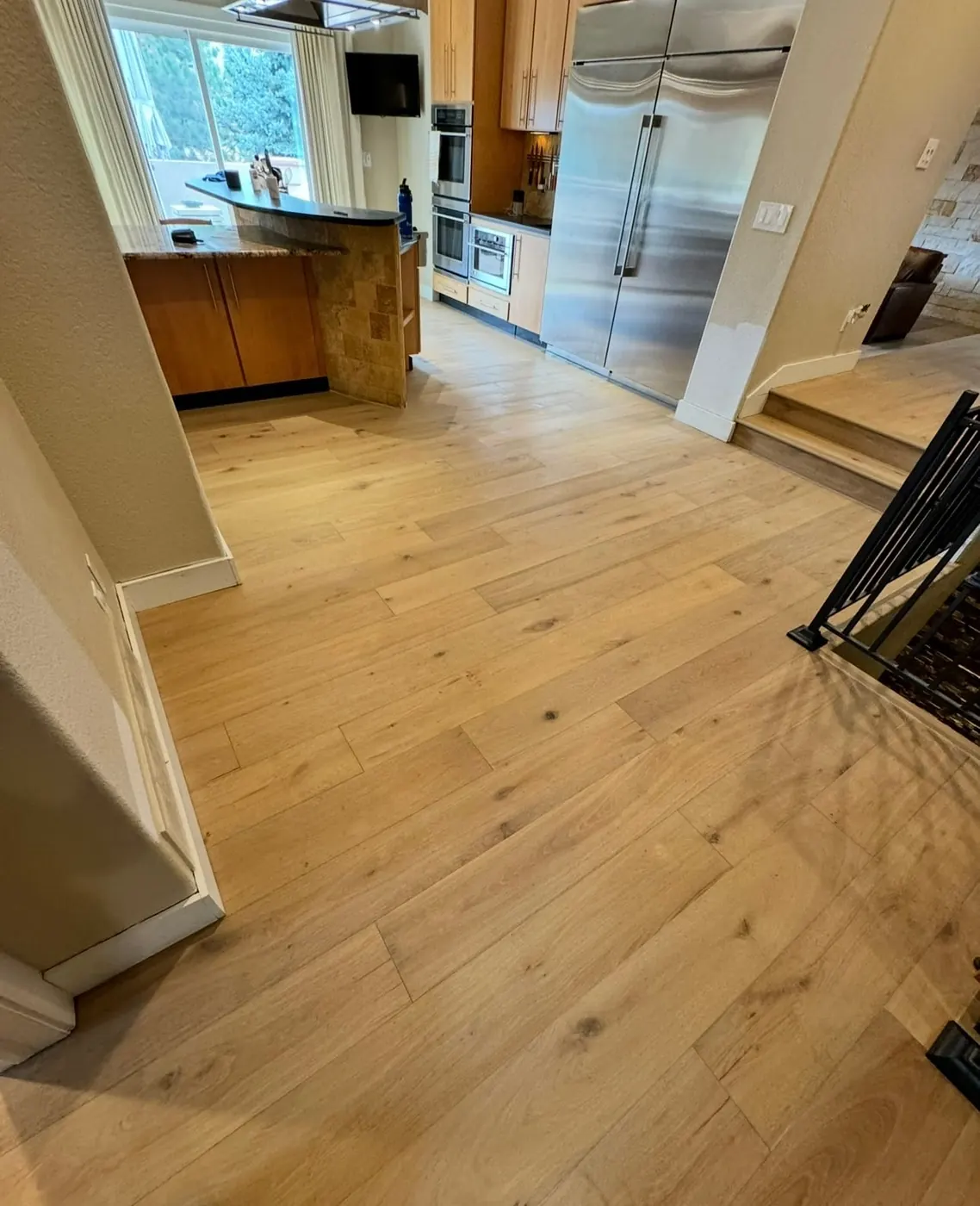
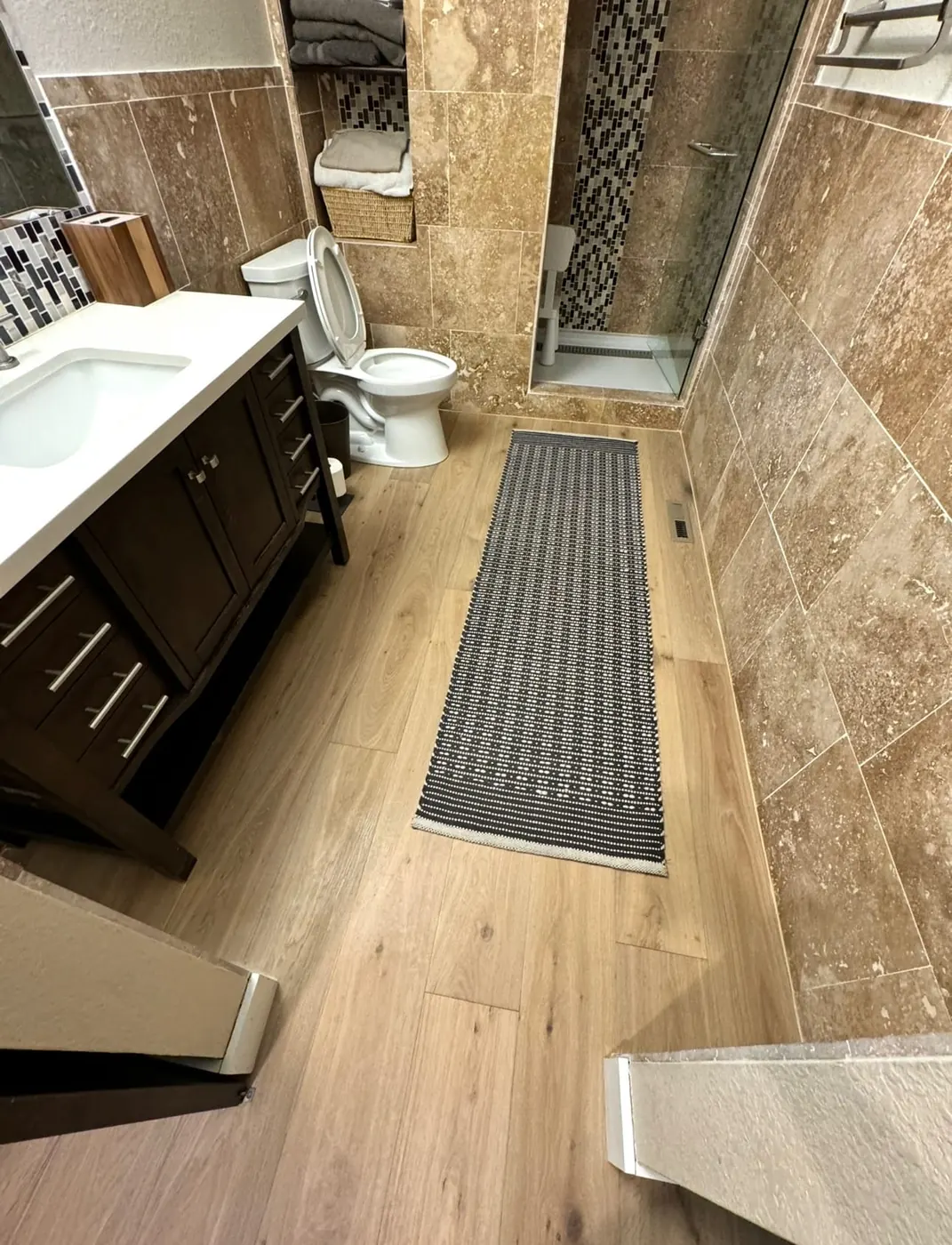
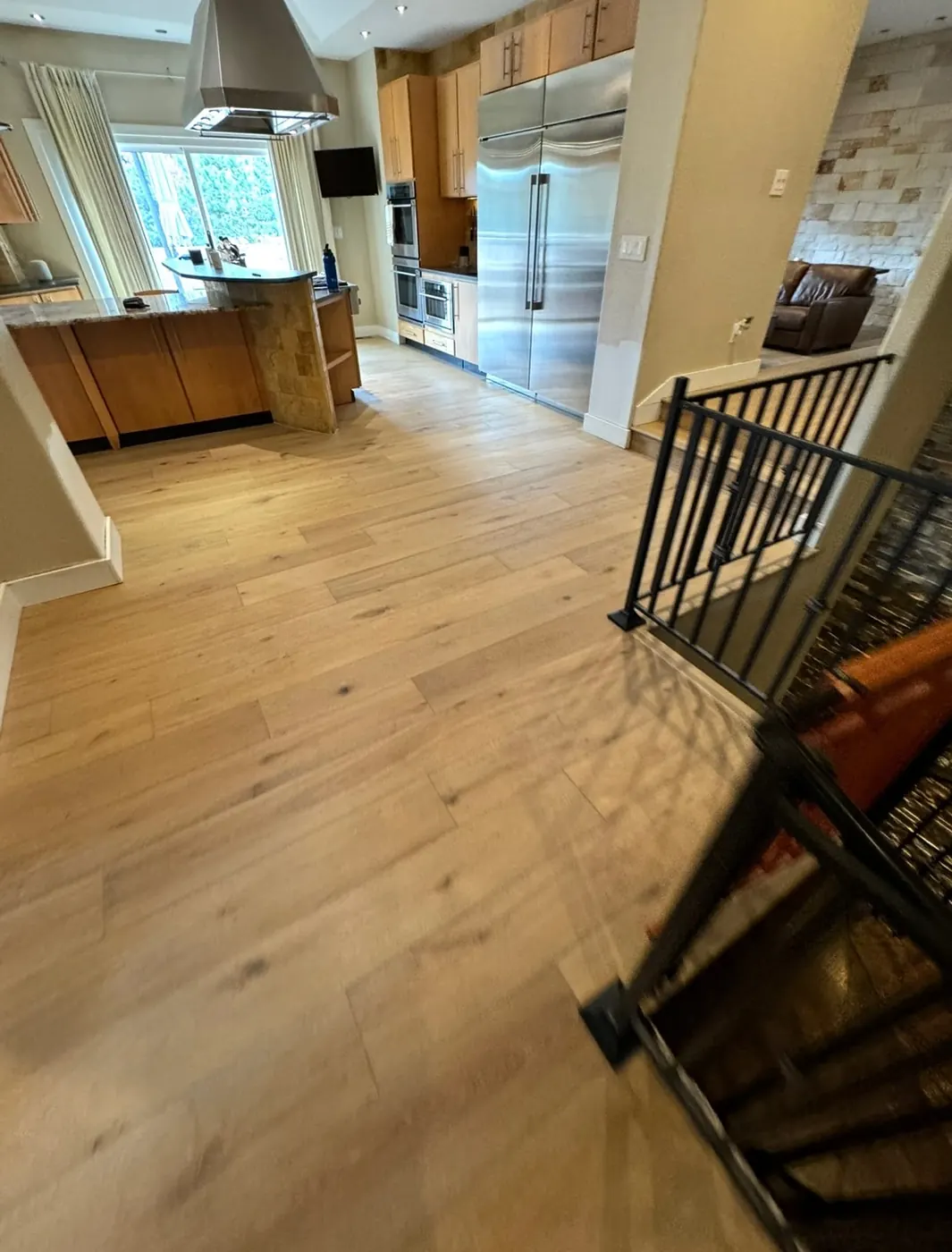

























Let’s plan your in-home estimate.
Share your project details with Gabriela. We’ll contact you to arrange your free visit and take accurate measurements.
Request a visit with Gabriela →Call Gabriela · (540) 426-9114Frequently asked questions
What is the difference between engineered and solid hardwood?
Solid hardwood is one piece of wood throughout, while engineered wood has a real wood top layer bonded to a layered core. The layered core tends to expand and contract less, making it a common choice for Colorado's dry climate and for slabs.
Can engineered wood go over concrete?
Often, after moisture testing and flattening the slab, if the manufacturer allows it. It is usually glued down or floated with a suitable underlayment. We check the concrete first and prepare it when needed.
Can engineered hardwood be refinished?
Some can, depending on wear-layer thickness. A thicker top layer can often be sanded once or more, while a thin veneer may not. Check the specification before buying, and we can help you compare options.
Is engineered wood good with radiant heat?
It is often the preferred choice because it is more stable under heat than solid wood. Follow the manufacturer's temperature limits, and bring the system up gradually. Tell us about your heating when we plan the project.
Is engineered wood waterproof?
No. It is more stable than solid wood, but it is still wood and can be damaged by standing water or ongoing moisture. It suits finished basements with good moisture control, while waterproof LVP can be better for damp spaces.
How do I get an engineered wood estimate in Denver Metro?
Text photos and rough room sizes for quick pricing, or schedule a free in-home estimate within 45 miles of Denver. We check the subfloor, moisture and layout and talk through plank options with you.