
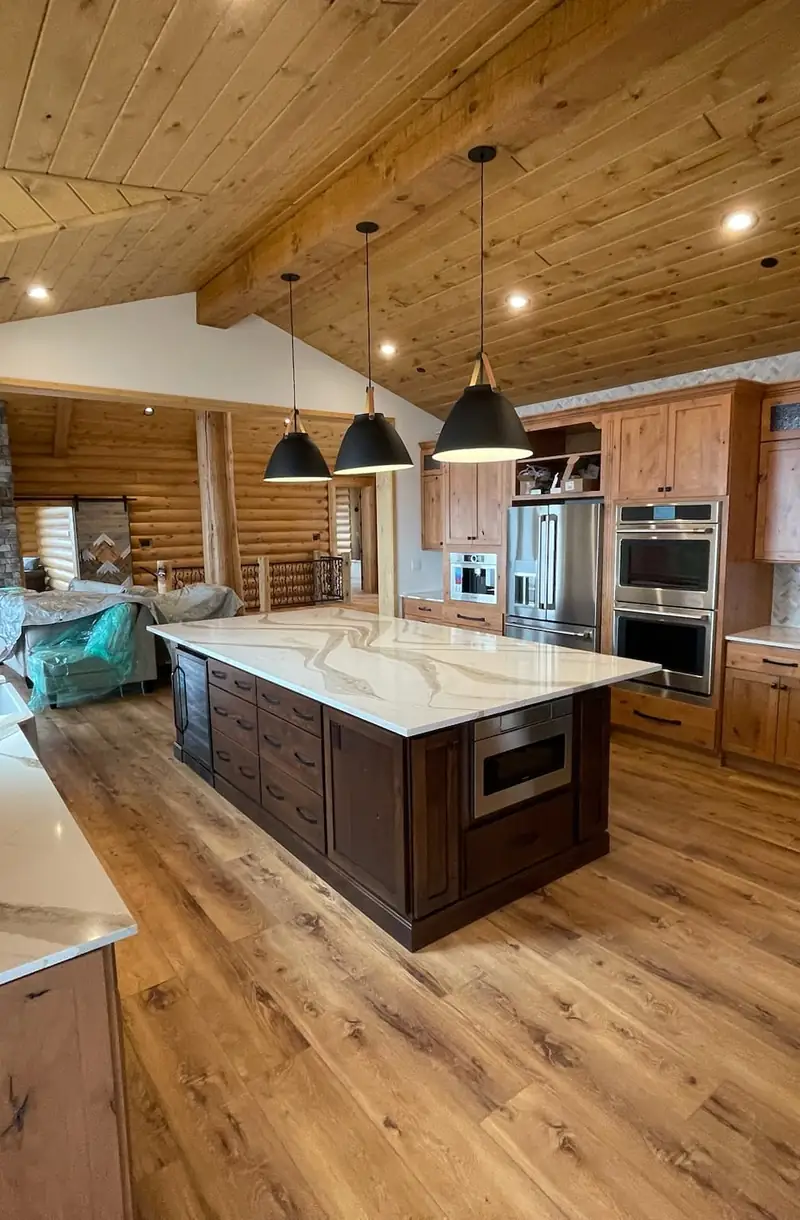
Why does Denver's climate matter for hardwood?
Wood is hygroscopic, which means it takes on and gives off moisture until it matches the air around it. When the air is dry, boards lose moisture and shrink slightly. When the air is more humid, they absorb moisture and swell.
Denver sits at high altitude with low outdoor humidity for much of the year, and heating season dries indoor air even further. Add warm summer days, cool nights and the occasional wet spring storm, and a hardwood floor in the Denver Metro area moves with the seasons more than the same floor might in a humid coastal climate.
That movement is normal. The goal of good installation is to keep it small, even and invisible.
Why do gaps appear between boards in winter?
In winter, furnaces run for months and indoor humidity often falls well below the range wood floors prefer. Boards shrink across their width, and thin gaps open between them.
Small seasonal gaps are generally considered normal, though how much is acceptable depends on plank width and the manufacturer's guidance, and they tend to close again when humidity returns in spring and summer. Wider gaps that stay open year-round, or gaps that appear in only one area, can point to a different cause such as a wet subfloor, boards installed too dry, or boards installed too tightly in a different season.
Wider boards typically show more visible movement than narrower ones, because each board has more width to shrink and swell. Keep that in mind when choosing a plank width.
What causes cupping and crowning?
Cupping is when board edges rise higher than the center, creating a shallow dish. It usually means the underside of the board has more moisture than the top. Crowning is the opposite, with the center higher than the edges, and often follows a cupped floor that was sanded before it fully dried.
Cupping does not usually come from room air alone. More common moisture sources include a concrete slab or crawl space, a plumbing or appliance leak, an irrigation or grading issue outside, or a basement that was never properly sealed.
If you see cupping, find and fix the moisture source first. Refinishing or replacing before the source is solved usually brings the problem back.
How should hardwood be acclimated in Denver?
Acclimation means letting the flooring adjust to the home's normal conditions before installation. The usual approach is to store the boards inside the home, in the rooms where they will go, with the heating and cooling running as they normally would.
The time needed varies by product, species and the conditions in your house. Manufacturers publish their own guidance, and following it matters more than any rule of thumb. A moisture meter is the reliable way to decide: the wood and the subfloor should read within the range the manufacturer specifies before work begins.
Because Denver homes can swing from very dry to temporarily damp, such as after a new drywall or paint project, it helps to schedule flooring after other wet trades are finished and the house has settled into normal living conditions.
- Run the home's heating or cooling normally for days before delivery
- Store boards flat, off the slab, in the rooms where they will be installed
- Check wood and subfloor moisture readings against the manufacturer's guidance
- Finish drywall, paint and tile work first
What indoor humidity range suits wood floors?
Many flooring manufacturers and wood associations commonly recommend keeping indoor relative humidity roughly between 30% and 50% year-round. Always check the warranty for your specific product, since some publish a narrower or slightly different range.
In Denver winters, staying inside that range often means adding moisture. A whole-house humidifier tied to the furnace is the most consistent option. Portable units can help in a single room if you keep them maintained and watch the readings.
A simple digital hygrometer, which is inexpensive and easy to place near the floor, tells you what the house is really doing. Check it through the first heating season in particular.
- Use a hygrometer to track humidity instead of guessing
- Add humidification in heating season if readings drop below the recommended range
- Avoid overcorrecting in summer; a dehumidifier or air conditioning may be needed in damp basements
- Keep humidifier pads and water supplies clean and working
Which hardwood choices handle Colorado well?
Solid hardwood is a classic choice on and above a wood subfloor. It can be sanded and refinished multiple times, but it responds most visibly to humidity changes. Engineered hardwood, built with layered backing, is usually more dimensionally stable and is often the better fit over concrete or in basements and radiant-heat homes.
Narrower planks and species with a reputation for stability tend to show less seasonal gapping than very wide planks. Quarter-sawn and rift-sawn cuts are often more stable than plain-sawn boards, though availability and appearance differ.
Your installer should talk through the subfloor, the room's location in the house, and your humidity habits before recommending a product.
What should you do before installing hardwood?
A good preparation checklist protects the floor for decades. Test the subfloor moisture, flatten any high or low spots, confirm the house is at normal living conditions, and decide how you will manage humidity after installation.
If you are not sure whether your home is ready, a free in-home estimate lets a flooring specialist check the subfloor and talk through your options. You can also text photos of your space for a quick first read on what might work.
Frequently asked questions
Is it normal for hardwood floors to have gaps in Denver winters?
Yes, small seasonal gaps are generally normal in Colorado because heating season dries indoor air and wood shrinks. They typically close again as humidity rises. Wide gaps that stay open year-round deserve a closer look.
How long should hardwood acclimate before installation in Denver?
It depends on the product and your home's conditions, so follow the manufacturer's written guidance and use a moisture meter to confirm readings. Boards usually acclimate indoors, with the heat or cooling running normally, before work starts.
Do I need a humidifier for hardwood floors in Colorado?
Often yes during heating season, because indoor air can drop below the commonly recommended 30–50% range. A hygrometer tells you if your home needs one. A whole-house unit is usually more consistent than portable humidifiers.
Why is my hardwood floor cupping in a Denver home?
Cupping usually means moisture is reaching the underside of the boards, from a slab, crawl space, leak or drainage problem. Find and fix the moisture source first, because sanding or replacing without that step often fails to solve it.
Is engineered hardwood better than solid hardwood for Colorado?
Engineered hardwood is often more dimensionally stable and can be installed over concrete or in basements, while solid hardwood suits wood subfloors above grade. The right choice depends on the room, subfloor and heating system.
Can altitude affect hardwood flooring itself?
Altitude by itself matters less than the dry air and temperature swings that come with it. Humidity, subfloor moisture and acclimation are what most affect how a hardwood floor behaves in the Denver area.
Related services
Where we do this work
More flooring guides
Flow Flooring Pros on Google
Your experience matters.
Have we worked on your floors? Share your experience on our Google business profile.
Visit our Google profile ↗