
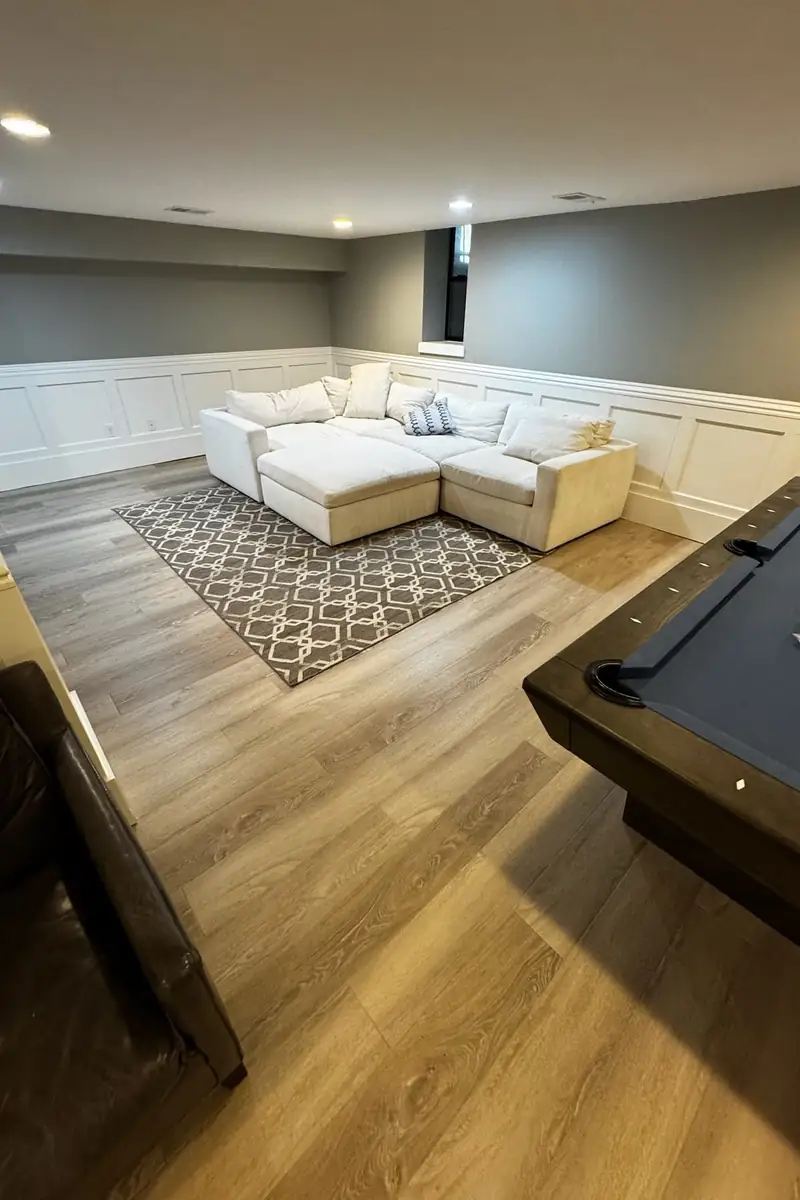
LVP vs Laminate: Which Is Better for a Denver Basement?
LVP & Laminate
What is the real difference between LVP and laminate?
Luxury vinyl plank is made of layered vinyl, often with a rigid core made of stone-plastic or wood-plastic composite. Laminate has a photographic image layer over a high-density fiberboard core.
Both are commonly sold as click-together floating floors, both come in wood-look planks, and both are popular for basement finishes. The key difference is how the core reacts to water. Vinyl cores generally do not absorb water. Fiberboard cores can swell and may not recover when saturated.
Which handles basement moisture better?
Basements in the Denver area are often dry most of the year, but many sit below grade on concrete slabs that can transmit vapor, and some see occasional water from heavy storms, snowmelt, a failed sump pump, or an appliance leak.
LVP with a waterproof core is typically more forgiving in those situations. Laminate marketed as water-resistant can tolerate spills better than older products, but standing water at the seams or edges is usually a problem. Check the manufacturer's specifications and warranty language for below-grade use.
- LVP: typically waterproof core, suited to below-grade rooms
- Laminate: water-resistant versions exist, but swelling risk is higher if water sits
- Both: still need a dry slab and a clean installation
Do you need to test the concrete slab first?
Yes. Concrete can hold and release moisture even when it looks dry. Most manufacturers require a moisture test, such as a calcium chloride or relative humidity test, and they publish the readings they will accept.
Slabs also need to be flat. Many floating floors specify a maximum height variation over a given span. Low spots can cause hollow-sounding, flexing planks, and high spots can cause joint stress. Grinding high areas and leveling low ones is a common step in Colorado basements.
If the slab fails a moisture test, a vapor barrier or sealer may be required before any flooring, or a different flooring type may be better.
Which is warmer and more comfortable underfoot?
A concrete slab stays cool, especially in winter. Both LVP and laminate add some insulation, and an underlayment helps. LVP often feels slightly softer and warmer to the touch, while laminate feels harder and more rigid.
If you plan to spend a lot of time barefoot, with kids or a home gym, consider a thicker plank with an attached underlayment, or a separate cushion layer approved by the manufacturer.
How do they compare for sound?
Hard floors can echo in a finished basement, particularly in a rec room. The underlayment makes a bigger difference to sound than the surface type. Many LVP products include an attached pad. Laminate commonly uses a separate underlayment, and some laminate planks can sound more hollow when walked on.
If the basement sits below living space or bedrooms, ask about sound-rated underlayments. In condos and townhomes, HOA rules may also set sound requirements for floors above other units, so check them before choosing.
How do wear and repairs compare?
Laminate surfaces are hard and scratch-resistant but can chip, and damaged planks are difficult to repair. LVP surfaces generally resist scratches and dents, can be quieter and more flexible, and a damaged plank can often be replaced individually in a floating system.
Neither can be sanded and refinished, so the wear layer and quality of the product matter. Ask for the wear layer rating, and keep spare boxes from the same production lot for future repairs.
Which one should you pick?
For a finished basement in the Denver Metro area, LVP is typically the more practical pick because of its water behavior. Laminate can be a good choice for a dry, well-sealed basement or an above-grade room when you want a particular look.
A free in-home estimate is a good time to have the slab and the room looked at. For a quick first answer, text photos of the basement for quick pricing.
Frequently asked questions
Is LVP waterproof enough for a Denver basement?
Many LVP products have waterproof cores, which makes them well suited to basements. They still need a dry, flat slab and proper seams, and standing water should be dealt with promptly. Check the manufacturer's below-grade guidance.
Can laminate be installed in a basement?
Often yes, if the slab passes the manufacturer's moisture test and the room stays dry. Laminate has a fiberboard core that can swell if it gets wet, so it is less forgiving than LVP in basements that may see leaks.
Do I need a vapor barrier under basement flooring?
It depends on the product and your slab test results. Many floating floors call for a vapor barrier or an underlayment with one. Follow the manufacturer's instructions, as they often decide whether the warranty applies.
Which is quieter, LVP or laminate?
The underlayment usually matters more than the surface. Many LVP products include an attached pad that reduces noise, while laminate depends on a separate underlayment. Ask about sound-rated options if the basement is below living space.
Does the concrete need to be level before installing LVP or laminate?
Yes, in most cases. Floating floors specify a maximum height variation across a given span, and uneven slabs can cause flexing, gaps and noise. Grinding and leveling are common prep steps in Colorado basements.
Can I install LVP or laminate over radiant heat in a basement?
Many products are approved for radiant systems within a maximum floor temperature, but not all. Check the manufacturer's limits and bring the system up gradually, as rapid temperature changes can stress the planks.
Related services
Where we do this work
More flooring guides
Flow Flooring Pros on Google
Your experience matters.
Have we worked on your floors? Share your experience on our Google business profile.
Visit our Google profile ↗