
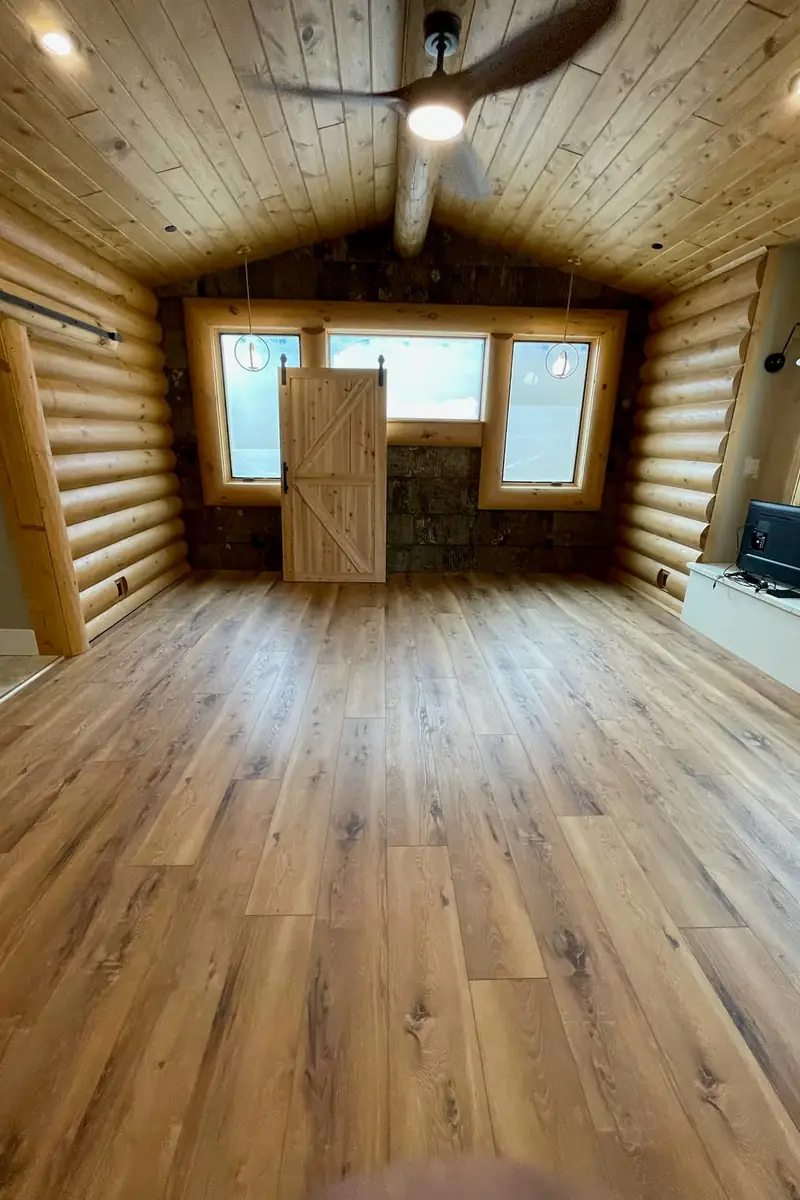
Engineered vs Solid Hardwood: Which Is Right for a Colorado Home?
Engineered Wood
What is the difference between solid and engineered hardwood?
Solid hardwood is a single piece of wood from top to bottom, usually milled with tongue-and-groove edges. Engineered hardwood has a real wood top layer, called the wear layer, bonded to a core of layered plywood or similar material.
Both look like real wood because both are real wood on the surface. The difference is in how they behave: layered construction resists expansion and contraction across the board, which matters in a place with dry air and large seasonal swings.
Which one handles Colorado's dry climate better?
Colorado's low humidity and heating season cause wood to shrink and swell. Solid boards move noticeably, especially wide planks. Engineered boards tend to move less because their cross-layered cores restrain the top layer.
That does not make solid hardwood a poor choice. Many Denver-area homes have solid oak floors that have lasted generations. It does mean that humidity control and proper acclimation matter more with solid wood.
- Solid: more visible seasonal gaps, especially in wide planks
- Engineered: typically more stable across seasons
- Either: do best with indoor humidity held in the range the manufacturer states (often about 30–50%)
Which is better for Colorado basements and concrete slabs?
Below-grade rooms and concrete slabs carry more moisture risk. Solid hardwood is generally not recommended below grade or directly on concrete, because moisture can cause cupping and movement.
Engineered hardwood is often approved for these conditions, either floated or glued down, with the right moisture test and vapor mitigation as the manufacturer requires. Always check the product's installation instructions and warranty, since the allowed methods vary.
In many Colorado basements the real question is whether the slab is dry, flat and clean enough. Grinding high spots or leveling low ones may be needed before any wood floor goes down.
Can you put hardwood over radiant heat?
Radiant systems add another source of drying and temperature change. Engineered hardwood is usually the preferred option over radiant heat because of its stability, and many manufacturers publish approved temperature limits and installation methods.
Some solid hardwood products are rated for radiant systems under specific conditions, but narrow planks and careful temperature control are typical requirements. Follow the manufacturer's guidance for maximum floor temperature and for how gradually to bring the system up to heat.
How many times can each type be refinished?
Solid hardwood has a thick wear layer, so it can often be sanded and refinished several times over its life. Engineered hardwood can often be refinished too, but only as many times as its wear layer allows.
Wear layer thickness varies by product, from thin veneers to thick layers close to solid hardwood in usable depth. If refinishing matters to you, ask about the wear layer before you buy, and keep in mind that thin layers may be suited to a light screen and recoat rather than a full sanding.
How do installation methods compare?
Solid hardwood is typically nailed or stapled to a wood subfloor. Engineered hardwood offers more options: nail-down, glue-down, or floating, depending on the product and subfloor.
Wider and longer engineered planks have become popular in Denver-area homes because they look like solid wood while offering more installation flexibility. Over concrete, glue-down or floating installation is common, often with a moisture barrier or underlayment recommended by the manufacturer.
- Wood subfloor above grade: solid or engineered both work
- Concrete slab: engineered is the typical choice
- Basement: engineered, with moisture testing first
- Radiant heat: engineered or specifically rated solid, within manufacturer limits
How should you decide?
Start with the room and the subfloor, not the sample. If you are on a slab or below grade, engineered is usually the practical route. If you are working on a first-floor wood subfloor and love the idea of a floor that can be refinished repeatedly, solid is a strong option.
A free in-home estimate lets a flooring specialist check moisture, flatness and the heating system before recommending anything. If you want a quick first answer, text photos of the space and the existing floor.
Frequently asked questions
Is engineered hardwood real wood?
Yes. Engineered hardwood has a real wood wear layer on top bonded to a layered core. It looks like solid wood because the surface is genuine hardwood, while the core adds stability for climates like Colorado's.
Can I install solid hardwood in a Colorado basement?
Solid hardwood is generally not recommended below grade or directly over concrete because of moisture risk. Engineered hardwood is the more common choice for basements, with moisture testing and the manufacturer's installation method followed.
Which is better over radiant heat, engineered or solid hardwood?
Engineered hardwood is usually preferred over radiant heat for its stability, though some solid products are rated for it. Follow the manufacturer's temperature limits and warm the system up gradually rather than all at once.
Can engineered hardwood be refinished?
Often yes, depending on the wear layer thickness. Thicker layers can be sanded and refinished, while thin layers may only tolerate a light screen and recoat. Ask about the wear layer before buying if refinishing matters to you.
Does engineered hardwood still gap in Denver winters?
It typically gaps less than solid hardwood, but it can still show small seasonal changes in very dry air. Keeping indoor humidity in the commonly recommended 30–50% range helps either type stay stable.
How do I know which hardwood type my home needs?
It depends on the subfloor, whether the room is above or below grade, moisture readings and any radiant heat. An in-home estimate with moisture testing is the most reliable way to match the product to the space.
Related services


Where we do this work
More flooring guides
Flow Flooring Pros on Google
Your experience matters.
Have we worked on your floors? Share your experience on our Google business profile.
Visit our Google profile ↗