
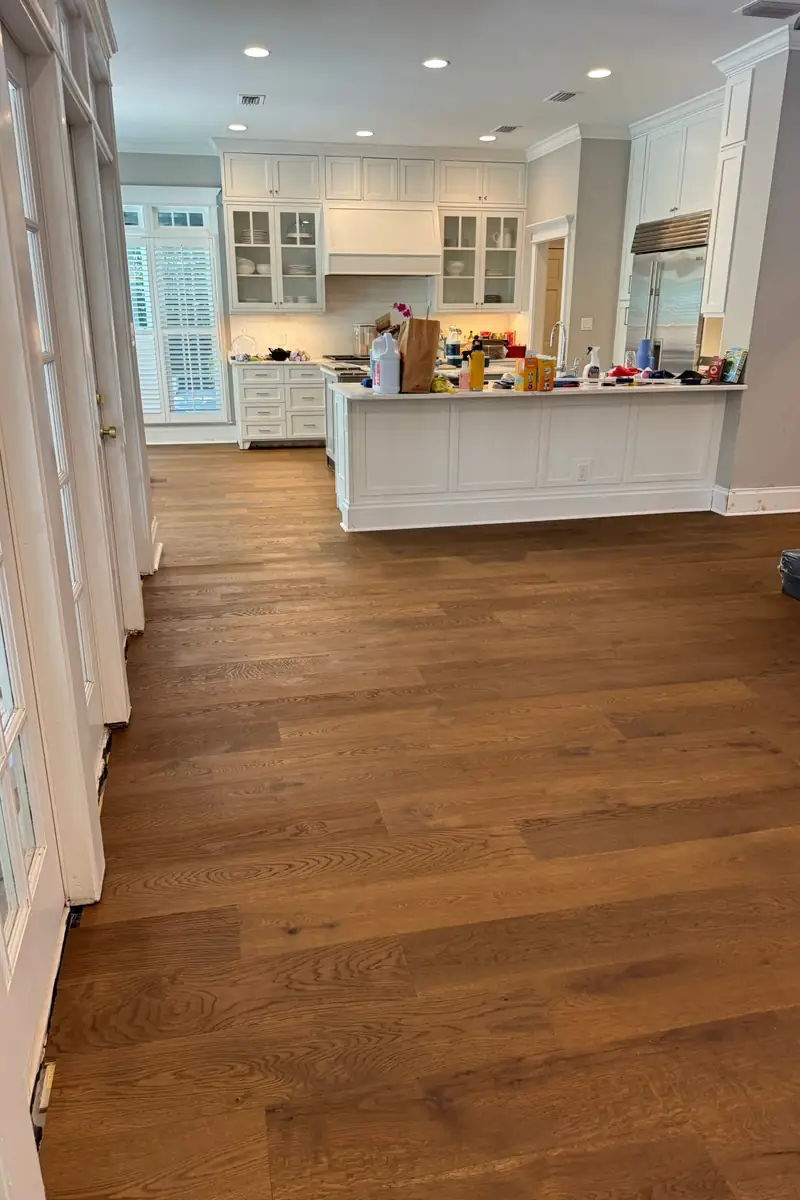
What to Expect on Flooring Install Day: From Estimate to Final Walkthrough
Process
What happens at the estimate and measuring stage?
The process usually starts with a conversation and a site visit. The installer looks at the rooms, measures square footage, checks transitions between floors and notes problems such as uneven areas, squeaks or moisture.
This is the time to talk about what you want: product, color, trim, stair details and timing. A good estimate lists the scope in writing, including removal, prep and finishing details.
Photos can speed this up. If you want a quick first look, you can text photos of your rooms before the visit.
How do material delivery and acclimation work?
Once you approve the estimate, materials are ordered. Lead times vary by product, so ask when to expect delivery.
Many flooring products, especially wood and engineered wood, are acclimated, meaning the material sits in the home for a period so it can adjust to indoor temperature and humidity before installation. Colorado's dry air makes this step worth taking seriously. The right length of time depends on the product, and the manufacturer's instructions govern.
Plan space for cartons. They are usually stored inside the rooms where they will be installed, or in a nearby area with similar conditions.
What should I do before the crew arrives?
Preparation on your side makes the day go smoothly. Ask your installer what they will move and what you should handle yourself.
In general, these steps help.
- Clear small items, rugs, decor and fragile belongings from the work area.
- Empty closets, shelves and cabinets if flooring runs into them.
- Confirm whether the crew moves large furniture and appliances.
- Arrange for pets and children to stay away from the work zone.
- Make sure the crew has parking and access, including HOA or elevator arrangements.
- Keep the home at a normal, steady temperature.
What happens on removal and subfloor prep?
On the first day, crews typically protect adjacent areas, move furniture, and remove old flooring, baseboards or carpet. Removal can be noisy and dusty, and old adhesive or staples often need to be cleaned from the subfloor.
Next comes subfloor preparation. On wood subfloors this may mean fastening loose boards, scraping, sanding and vacuuming. On concrete it may include moisture testing, grinding and self-leveling compound. This step is not glamorous, but it decides how the finished floor feels and lasts.
If hidden problems are uncovered, such as water damage or uneven areas, a good installer will show you, explain options and get your approval before extra work.
How does the installation itself go?
Installation methods depend on the product. Floating floors click together over underlayment, glue-down floors are bonded to the subfloor, and nail-down wood is fastened through the tongue. Installers plan layout first so that boards or planks look balanced at walls and doorways.
A typical project takes from a day to several days, depending on the area and the type of floor. Refinishing involves sanding and multiple coats with drying time between them, so pets and foot traffic may need to be limited for longer.
Expect cutting, which means noise, and some sawdust. Professionals usually contain dust where they can, and clean up at the end of each work day.
What are the finishing touches?
After the main floor is in, the crew installs trim, baseboards or quarter round, transitions at doorways, and any stair nosing or vent covers. These details make the floor look finished and protect edges.
Cleanup should include removing debris and vacuuming the new floor. Ask what is included in your estimate, such as disposal of old material.
What does the final walkthrough cover?
Before final payment, walk the floors with your installer in good light. Look at seams, transitions, edges, corners, stair details and any areas near cabinets or vents.
Raise concerns right away. If something needs a touch-up, it is easier to address while the crew is still on the job. Ask for any leftover boxes of flooring to be stored, since matching products later can be difficult.
How should I care for my new floors?
Your installer should give care instructions that match your product. In general, avoid excess water, use felt pads under furniture, wipe up spills quickly and follow the manufacturer's cleaning guidance.
In Colorado's dry climate, keep indoor humidity in the range your flooring maker recommends, especially for wood. Ask how long to wait before placing rugs or heavy furniture on new finishes.
Flow Flooring Pros serves homes within 45 miles of Denver and offers free in-home estimates, so you can ask about each of these steps before you commit.
Frequently asked questions
How long does a typical flooring installation take?
It depends on the product, the square footage and the subfloor. Some rooms are finished in a day, while whole-home projects, stairs or refinishing can take several days. Ask for a written schedule.
Do I need to move my furniture before the installers come?
Policies differ, so ask when you book. Many crews move standard furniture, but you will usually need to clear small items, fragile pieces, closets and anything that is valuable or hard to handle.
Can I stay home while my floors are installed?
Usually yes, though there will be noise, some dust and limited access to the work area. Refinishing and some adhesives have odors, so ask about ventilation and whether to arrange a short stay elsewhere.
Why does my flooring need to acclimate?
Wood and some other products expand and contract with temperature and humidity. Letting them adjust in the home before installation reduces the chance of gaps or buckling later. Follow the manufacturer's instructions for timing.
When can I put furniture back on my new floors?
It depends on the floor type and finish. Floating floors may allow furniture quickly, while refinished wood often needs a longer cure. Ask your installer for specific timing and for advice on felt pads.
What if I do not like something at the final walkthrough?
Tell the installer right away and point out the area. Many issues can be corrected on the spot or scheduled for a touch-up. Having the agreed scope in writing helps both sides resolve questions.
Related services




Where we do this work
More flooring guides
Flow Flooring Pros on Google
Your experience matters.
Have we worked on your floors? Share your experience on our Google business profile.
Visit our Google profile ↗